Altman Siegel Closes in San Francisco
88Oct. 18, 2025
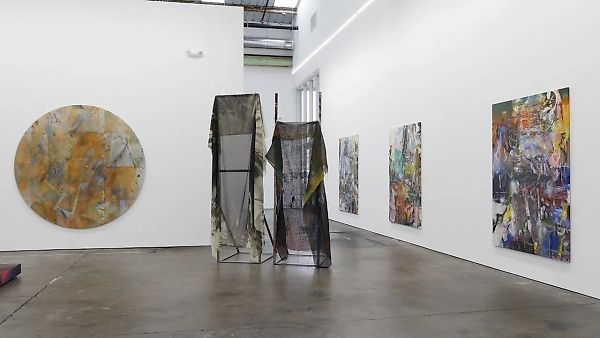
San Francisco’sAltman SiegelGallery is set to close November 22 after sixteen years in operation. Its last exhibition, of the work of Japanese painterShinpei Kusanagi, will close a week earlier, on November 15. Founded in 2009 in downtown San Francisco by Claudia Altman-Siegel, the gallery was known for showing cutting-edge conceptual work by artists such as Lynn Hershman Leeson, whose work centers algorithms, identity theft, and data tracking, and Trevor Paglen, whose work focuses on technology and surveillance. Also included on its current roster are Simon Denny, Koak, Richard Mosse, Sara Vanderbeek, Didier William, and Kiyan Williams.
“It is with both pride and sadness that I announce that Altman Siegel will close its doors to the public,” wrote Altman-Siegel in astatementpublished on the gallery’s website. “As it has become too difficult for a gallery this size to scale in this climate, I have made the incredibly tough decision to close rather than diminish either the space or the commitment to exhibit conceptually uncompromising work.”
Altman-Siegel went on to describe San Francisco’s art scene in 2007, the year she moved there. “I encountered a city defined by exceptional museums, a rigorous community of artists, and a handful of dedicated galleries,” she wrote. “I was inspired by the entrepreneurial spirit and the counterculture of the Bay Area and felt compelled to contribute to its cultural fabric.” Inaugurating her gallery at 49 Geary Street, Altman-Siegel moved the operation to a 5,000-square-foot space in the then up-and-coming Dogpatch neighborhood in 2016 and added a smaller outpost in Presidio Heights in 2024.
The gallery’s closure comes as the art market contends with shifting tastes and buying patterns, steep US tariffs, and global financial, political, and social instability. The turbulence has claimed a number of well-known galleries, some of them in business for decades. Among those that have called it quits in recent months are Los Angeles’s Blum and LA Louver; New York’s Kasmin, Tilton Gallery, and Venus Over Manhattan; and the bicoastal Clearing, which had operated outposts in New York and Los Angeles.