Sylvain Amic (1967–2025)
221Sept. 4, 2025
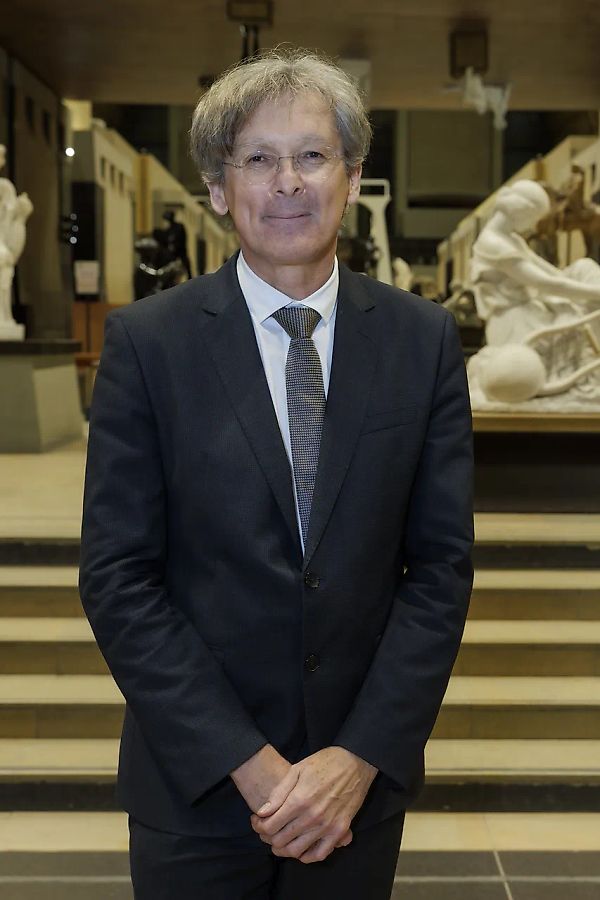
Sylvain Amic, president of the Musée d’Orsay and the Musée de l’Orangerie in Paris, died of heart failure August 31 while vacationing in the south of France. He was fifty-eight. Amic had been appointed to lead the institutions just sixteen months ago. Known for his progressive views and for his championship of restitution, he had during his brief tenure inaugurated a series of large-scale regional outreach initiatives, bringing 3.7 million visitors to the Orsay. Just before he died, he had organized a traveling show of many of the museum’s masterpieces. “Sylvain Amic wanted everyone to be able to access the marvels of art, from Manet to Soulages,” said French president Emmanuel Macron in a statement posted to social media. “He understood the force of universal emancipation of our culture.”
Sylvain Amic was born on April 26, 1967, in Dakar, Senegal, to French parents, both of whom were educators. Early in his career, he taught at a French school in Banjul, Gambia, where he rose to become headmaster. Former French culture minister Rima Abdul Malak told theNew York Timesthat the experience shaped his strong belief that France should return to Africa treasures looted from the continent during the colonial era: He would go on to play a major role in establishing French laws stipulating the repatriation of artifacts and human remains.
In the late 1990s, Amic turned his attention from education to curation. From 2000 to 2011, he served as curator in charge of the nineteenth century, modern, and contemporary art collections at the Musée Fabre in Montpellier, France. While working there, always excited about bringing art to new and young audiences, he created the inaugural website for the French American Museum Exchange (FRAME), an organization with which he remained deeply involved for years. In 2011, he was named director of a museum in Rouen. In that capacity, he established an annual Impressionist festival and organized the Museums of Rouen, a consortium that manages eleven of the Normandy city’s institutions. From 2022 until 2024, he served as an adviser to Abdul Malak, before leaving to take up his post at the Musée d’Orsay.
Amic was especially interested in gaining new audiences for the museum’s storied collection of masterworks, and sought to show the continued relevance of nineteenth- and twentieth-century art in contemporary times. At a time when museums around the world have come under fire from various groups—ranging from those seeking the removal of wealthy board members with questionable ties, to organizations devoted to ensuring that staff reflect the surrounding communities, to collectives concerned with political representation, to governments attempting to quash historical references that clash with their worldviews—he argued strongly for the importance of such institutions.
“Images have an extraordinary power. They can touch us directly without the need for words,” he told Chinese platformSouqueethis past June. “Because of this, the power of images is twofold: On the one hand, they can transcend the boundaries of language and culture and immediately generate emotional resonance; on the other hand, this power can also lead to misunderstandings. If it lacks the support of background knowledge and historical context, it may be misinterpreted, misunderstood, or even abused. This is exactly the responsibility of the museum,” continued Amic. “It is not only a space for displaying images, but also a place to give these images context and meaning. Through their academic training and curatorial logic, researchers and curators in the museum provide audiences with a path to ‘watch,’ allowing people to understand why these images were created in this way, when they were produced, and what social context they responded to.”
At his death, Amic was shepherding the construction of the Orsay’s new research center, slated to be completed in 2026, and working on a planned rehang of the museum’s collection.
“He told me that he had never been happier in his life,” Abdul Malak told the Times, recalling a recent conversation with Amic in which he expressed a desire to send a truck filled with artworks to various French towns. “I am comforted by the fact that he fulfilled his lifelong dream of becoming the head of Orsay, even if it was a dream that ended much too soon.”