Tony Bechara (1942–2025)
158May 2, 2025
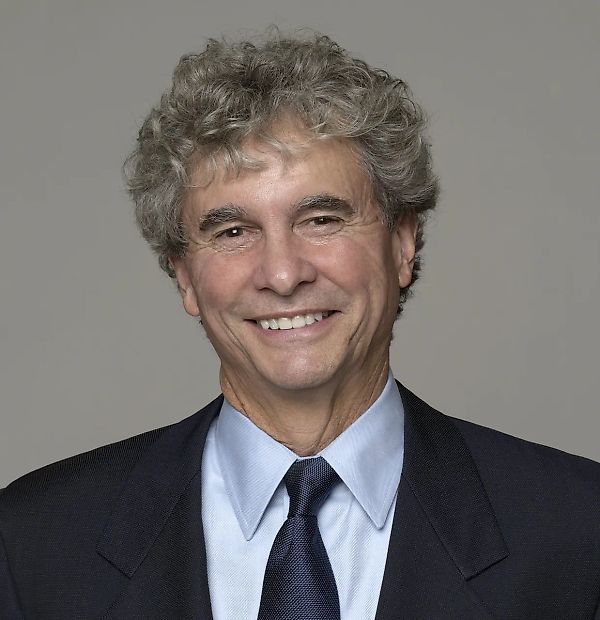
Puerto Rican painter and philanthropist Tony Bechara, who as board chair of El Museo del Barrio oversaw the New York institution’s transformation from a local concern to an internationally renowned repository of Latinx and Latin American Art, died in New York on April 23, his birthday. He was eighty-three. His death was announced by the museum, and by Lisson Gallery, which represented him. A tireless champion of overlooked artists, including Carmen Herrera and Leon Polk Smith, to whom he brought much-deserved attention, he was an esteemed artist in his own right, known for his bright, buzzing, mosaic-like canvases that balanced control with chaos. Bechara drew from a wide range of influences including Post-Impressionism, pointillism, hard-edge abstraction, and basket-weaving traditions to create tightly gridded works that radiated warmth and captivated viewers eager to discover patterns in their pixelated surfaces. For him, making art and elevating its presence in the world were pursuits of equivalent importance. “I’m just passionate about art,” he toldAzureAzure’s Jesús Rosado in 2015. “My commitments to cultural institutions . . . are for me artistic projects. They are an extension of my commitment to art, like unfinished murals in which I work during the night.”
Antonio Bechara was born on April 23, 1942, in San Juan, Puerto Rico, to a Spanish mother and a Lebanese father. After a stint in military school, he attended Georgetown University, where he studied philosophy and economics. Following graduation, he bounced from Georgetown Law School to New York University and the Sorbonne in Paris before returning to New York in 1967 and enrolling in the School of Visual Arts, where he studied under such renowned figures as pop artist Steve Gianakos, art historian Lucy Lippard, photorealist painter Robert Mangold, and abstractionist Malcolm Morley. “It was very exciting in all, partly because it was during this period that I went from being a figurative painter to an abstract painter,” he told theBrooklyn Rail’s Phong Bui in 2023.
In the 1970s, Bechara developed his trademark artistic process, which he called “painting blind.” The method involved using quarter-inch tape to mask off square sections of canvas in a tile-like grid, applying pigment to the uncovered squares, and then repeating the process over and over, never allowing himself to see the entire canvas at once until he deemed the painting finished. Often containing thousands of vividly hued squares, the paintings appeared to vibrate, suggesting what Bechara characterized as an “optical symphony.”
“I do relate my paintings to music, especially [the] twelve-tone serialism of Anton Webern and Alban Berg who led to minimalist composers like Steve Reich, Terry Riley, or Philip Glass, all of whom have deconstructed the serial tradition,” he told Bui. “By, for example, generating a variation of sounds may appear like the musical score but is never the same, they create a repetition of a specific melody that takes the original musical score and either repeats it so that it is the same, or repeats it so that it is primarily the same but is transposed so that it starts on a different note.”
As Davida Fernández-Barkan pointed out inArtforumlast year, “it is no accident that he began to develop [his] approach—which he says produces ‘pixels’—during the 1970s, when computer technology began its steady march into everyday life. . . . Each square in his grids is painstakingly executed. Many are imperfect—they do not align impeccably with one another, and pigment often creeps into a neighboring square; it sometimes peels off the surface. The acrylics Bechara uses gives his edges a dimensional quality, emphasizing associations with textile weaving or basketry. The artist meets the preprogrammed system with idiosyncrasy and defect: in short, with humanity.”
Concurrent with his painting career was Bechara’s career as a philanthropist. A board member of El Museo del Barrio since 1993, he was appointed chair in 2000 and would serve in that capacity through 2015, becoming chairman emeritus in 2016. “Tony Bechara’s contributions to El Museo del Barrio are truly unparalleled,” said museum board chair Karla Harwich in a statement. “His visionary leadership, relentless advocacy, and deep belief in the power of culture to uplift communities helped shape the very identity of this museum.” In 2018, he donated $1 million to the institution’s endowment, in aid of its curatorial and educational programs. He additionally sat on the boards of Studio in a School, Instituto Cervantes, theBrooklyn Rail, and Brooklyn Academy of Music. “He was a force of nature,” said Patrick Charpenel, El Museo del Barrio’s executive director, in a statement. “His legacy will continue to inspire generations to come.”
Among the exhibitions Bechara was included in in the 1970s and ’80s were those organized by the Boulder, Colorado-based Criss-Cross pattern printing collective, as well as the group exhibition “Islamic Allusions” at the Alternative Museum in New York and “The Shaped Field: Eccentric Formats” at MoMA PS1 in New York. His work was featured in the 1975 Whitney Biennial, and he was the subject of solo exhibitions at El Museo del Barrio in 1985; the Alternative Museum, New York, in 1988; Artists Space in New York in 1993; and Museo de Arte de Puerto Rico in 2008. Among the group shows he participated in recently are 2019’s “With Pleasure: Pattern and Decoration in American Art, 1972–1985,” at the Museum of Contemporary Art, Los Angeles, which traveled to the CCS Bard Galleries and Hessel Museum of Art, Annandale-on-Hudson, New York, in 2021; and “Reconstructing Horizons” at the Shijiazhuang Art Museum and Academy in Shijiazhuang, China, which closed this past March.
Bechara’s work is held in the collections of major institutions including the Sheldon Museum of Art, University of Nebraska, Lincoln; the Brooklyn Museum, El Museo del Barrio, and the Metropolitan Museum of Art, all in New York; the Aldrich Contemporary Art Museum, Ridgefield, Connecticut; Massachusetts Institute of Technology, Cambridge; and the Museo de Arte, San Juan, Puerto Rico. Earlier this year, he gifted his 2015 painting 19 Reds to the Parrish Art Museum in Water Mill, New York. The artist’s book Tony Bechara: Annotations on Color Schemes, detailing his process, will appear this summer, while a monograph, including an interview with Bechara and Hans Ulrich Obrist, is forthcoming from El Museo del Barrio and KMEC Books.