Max Kozloff (1933–2025)
159April 11, 2025
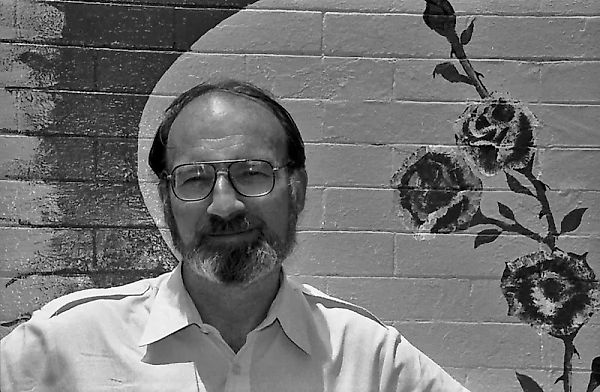
Iconoclastic critic, art historian, and photographerMax Kozloff, who served asArtforum’s executive editor in the 1970s before turning to his own artistic practice, died on April 6. He was ninety-one. His wife, noted Pattern and Decoration artist Joyce Kozloff, announced his death in anInstagrampost, revealing that he had been suffering from Parkinson’s disease for over a decade. Kozloff in the 1960s and ’70s brought fresh perspectives to such established forms as Futurism and Cubism, arguing that artists were influenced by such external forces as social currents and politics. His 1973 essay “American Painting During the Cold War” rewrote the narrative around Abstract Expressionism and is still considered required reading today. Kozloff’s article exploded the Eurocentric concept of formalist innovation championed by Alfred H. Barr, the inaugural director of New York’s Museum of Modern Art. “When I read his setting forth that history, in terms of coherent movements and concrete blocks of leading personalities and of stylistic formal analyses, I kept on feeling that something very serious had been omitted,” Kozloff told Annette Leddy in a 2014oral history interviewfor the Smithsonian Institution’s Archives of American Art. “I kept on feeling, somehow, left out in the cold and missing certain things that I felt when I looked at modern art.”
Max Kozloff was born the youngest of four sons in Chicago in 1933, to parents of Eastern European descent. His father, a Ukrainian immigrant who owned a leather factory, frequently took him to the Art Institute of Chicago, which,Kozloff toldArtforum’s Christopher Lyon in 2023, “became a kind of sacred spot, a sanctuary of inspirations, the cultural place that singled itself out for me.” The young Kozloff was especially taken with works by Edward Hopper, Grant Wood, and Georges Seurat, as well as with Andrea del Verrocchio’s imposing equestrian statue of an Italian soldier that greeted visitors as they entered the museum. The 1945 filmThe Picture of Dorian Gray, based on Oscar Wilde’s tale of the same name, profoundly impacted him as well. “The object was to show that a portrait had its own animus, in that it could reveal what was covered up by elitist idioms,” he told Lyon.“I got excited by that.”
Kozloff enrolled in the University of Chicago at the age of sixteen. Graduating in 1953, he served in the US Army from 1954 to 1956 before returning to his alma mater to earn his MA, which he received in 1958. The following year, he enrolled in the Ph.D. program at New York University’s Institute of Fine Arts, and in 1961 he began working as an art critic forThe Nation, for whom he would pen articles through 1968. “I approved very much of the critical spirit theNationembodied, as a rather lonely radical magazine, during this time of reaction, patriotism, and jingoism, and war,” he told Leddy.
In 1964, by now contributing criticism toArt International, he abandoned his Ph.D. studies altogether and accepted a job as associate editor atArtforum. Easily distinguishing himself as a sharp, erudite writer with a healthy disregard for canon, he rose to become a contributing editor in 1967 and in 1975 was named to the role of executive editor, which he would occupy through 1977. While atArtforum, he wrote two of his best-known essays, the aforementioned “American Painting During the Cold War” and “The Authoritarian Personality in Modern Art” (1974), the latter of which argued that audiences “tended to take at face value the literature of self-endorsement given us by their authors” and thus failed to truly apprehend either them or their art. “The most pallid and genteel tracing of ideas on modern art has been derived from the passionate utterance of the modernist,” he wrote. “It is a wonder to behold with what bloodless ease we have converted their lust for the absolute into a righteous subversion or an exalted humanism.”
One of Kozloff’s principal goals while atArtforumwas to turn it into an anti-commercial publication, an endeavor he undertook alongside John Coplans, its editor in chief from 1972 to 1977. “We became politically aligned with a critical position against going practices in the art world,” Kozloff told Leddy. “For instance, above all, the ingoing support that ad revenue gave to highlighting the artists that the galleries represented. We wanted to cut that down. We also wanted to cut down the issue of favoritism, where staff writers would write about their friends or allies.” The stance proved unpopular with the magazine’s publisher, and, after Coplan’s contract went unrenewed, Kozloff made his exit.
Recently having taken up photography—of which he was an early and ardent advocate, when it was not yet considered fine art—he continued to write on the medium and showed his own pictures extensively in the ensuing years, working exclusively in color. “What triggered my shift to a focus on photography in the ’70s was, on an elemental level, an emotional response to pictorial language in photography because of its credibility, its decisiveness in framing, and its ubiquity as a communicative news medium,” he told Lyon. Kozloff also made and exhibited abstract paintings that channeled heroes such as Pierre Bonnard and Philip Guston. In recent years, as he battled profound hearing loss, the brushstrokes comprising his canvases took on what Kozloff described as a musical quality.
Kozloff was the author of numerous volumes, among them monographs on Jasper Johns, Johannes Vermeer, and Leon Levinstein; Cubism/Futurism (1973); Photography and Fascination: Essays (1979); The Privileged Eye (1987); and Cultivated Impasses: Essays on the Waning of the Avant-Garde, 1964–1975 (2000). Concurrent with his work as a writer, an editor, an artist, and a photographer, Kozloff taught at the college level beginning in 1958 at the University of Chicago’s Downtown Center and moving on to New York’s Cooper Union in 1959, before going on to teach at institutions across the US, including CalArts, Yale, and the University of California, Los Angeles. From 1989 to 2000, he taught in School of Visual Art’s master’s program in photography, which he helped to establish.
“Does an active critic have a sell-by date? Is there a limit to how long one can write authoritatively about the art of one’s time? There is a limit, which could be discussed as a temporal one. That is to say, the amount of time that an idiom takes to reach its apogee or its apex of attention and approval before it descends into something blindsided and immaterial and irrelevant and out of date,” he told Lyon in 2023. “Different types of art have different life spans in terms of those criteria. And then you discover much more abundantly in photography than in art that there are merits and virtues, overlooked careers that no one knows about or has heard of. And so, for me, the possibilities of discovery became an incentive to look around, find out things for myself,” he concluded. “I liked that.”