Ilya Kabakov (1933–2023)
244May 29, 2023The names
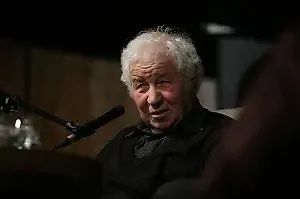
Ilya Kabakov, a giant of Russian Conceptualism, died May 27 at his home on Long Island, New York. He was eighty-nine. News of his death was announced by his family. Widely considered to be one of the most important artists of the Soviet Union, Kabakov created installations that explored the mundanity of life in the Communist state. He made many of these in secret, even while he labored publicly as an illustrator of children’s books. Kabakov’s installations were harshly critical of the totalitarian regime that inspired them, pointing up what his wife and, from 1997, collaborator Emilia Kabakovcharacterizedas “suffering, fear, the tragedy of man.” Though tethered to a particular historic moment and place, these works nevertheless evoke a universal desire for escape and freedom that continues to endure.
“Ilya Kabakov is arguablytheparadigmatic installation artist,” Claire Bishop bluntly asserted in a 2018 issue ofArtforum.RelatedHELEN FRANKENTHALER FOUNDATION SUED FOR “DESTROYING” PAINTER’S LEGACYBMA CREATES PAID INTERNSHIPS HONORING VALERIE MAYNARD Ilya Kabakov was born September 30, 1933, in Dnipropetrovsk, Ukrainian Soviet Socialist Republic (now Dnipro, Ukraine), to a locksmith father and an accountant mother. The advent of World War II separated the family, as Kabakov’s father departed to fight in the conflict and the young artist and his mother were evacuated to Samarkand. The Leningrad Academy of Art had also been forced by the conflict to move to that city for a time, and Kabakov began studying there. Following the war’s end, he attended Moscow’s Surikov State Art Institute, graduating with a degree in graphic art and book illustration. He promptly joined the Union of Artists and began a fruitful career as an illustrator of children’s books that was to last decades. Concurrent with his entry into the rank-and-file of the workaday world was Kabakov’s personal practice, or “unofficial” art, which he began making in his studio in central Moscow.
Kabakov and his studio by the early 1970s had become the hub of a small constellation of like-minded artists, among them Erik Bulatov, Viktor Pivovarov, Oleg Vassiliev, and Vladimir Yankilevsky. The group operated within what Kabakov later described as “a complete vacuum of artistic life,” having no opportunities to show their work publicly. Initially making paintings and text-based works, Kabakov expanded his oeuvre to include the installations for which he would become known. In 1987, as the Cold War receded in the rearview mirror, Kabakov, by then in his fifties, emigrated to the United States. A year later, he achieved global acclaim with the show “Ten Characters” at New York’s Ronald Feldman Fine Arts. Included in the exhibition, which featured ten re-creations of Soviet-era tenement rooms, wasThe Man Who Flew into Spacefrom His Apartment.
The 1988 work comprised a small chamber whose walls were plastered with Soviet propaganda and whose ceiling contained a large hole, through which the titular subject had presumably launched himself from a makeshift slingshot sitting at the abandoned room’s center. The piece, which commented at once on Soviet participation in the space race and the Communist government’s often dire impact on its citizens’ living conditions, was seen as a watershed work and was instrumental in the artist’s rise to fame. Now unconstrained by Soviet politics and the attendant scarcity of real estate, Kabakov from this point allowed his installations to grow larger, as notably embodied, for example, in his and Emilia Kabakov’s room-filling 2014 Monumenta commission at Paris’s Grand Palais. TitledStrange City, the work featured a satellite dish that rose several stories high within the iconic glass-and-steel structure, dwarfing visitors. Though the Kabakovs continued to interrogate themes of Soviet life far past the dissolution of the state, their works remained—perhaps dishearteningly—germane, touching on topics including isolation and suppression. In recent years, the pair had returned to painting, at a large, if not monumental scale.
The paintings did not earn the rave reviews of the installations but the artists remained undaunted and undimmed. “The Kabakovs stand above their fictions, however discreetly, as their paintings transcend the contexts that might incorporate them,” wrote Barry Schwabsky in a 2022 issue ofArtforum. Kabakov was the subject of “Ilya and Emilia Kabakov: The Utopian Projects” at the Hirshhorn Museum and Sculpture Garden in Washington, DC, in 2018, and of the retrospective “Ilya and Emilia Kabakov: Not Everyone Will Be Taken Into the Future,” which opened at London’s Tate Modern that same year and traveled to the State Hermitage Museum, Saint Petersburg; and the State Tretyakov Gallery, Moscow. His work is held in the collections of numerous major institutions around the world, including the Museum of Modern Art and the Solomon R. Guggenheim Museum, both in New York; the Centre Pompidou, Paris; the State Hermitage Museum; and the State Tretyakov Gallery. Kabakov was highly decorated, having variously won Frances Chevalier de l’Ordre des Arts et des Lettres and then its Commandeur De L’Ordre Des Arts Et Des Lettres as well as a Medal for Life Achievement in Art from the Moscow Art Academy and and the Gold Medal For Achievements in Art from the National Art Club, New York..