Richard Flood (1944–2005)
184Feb. 25, 2025
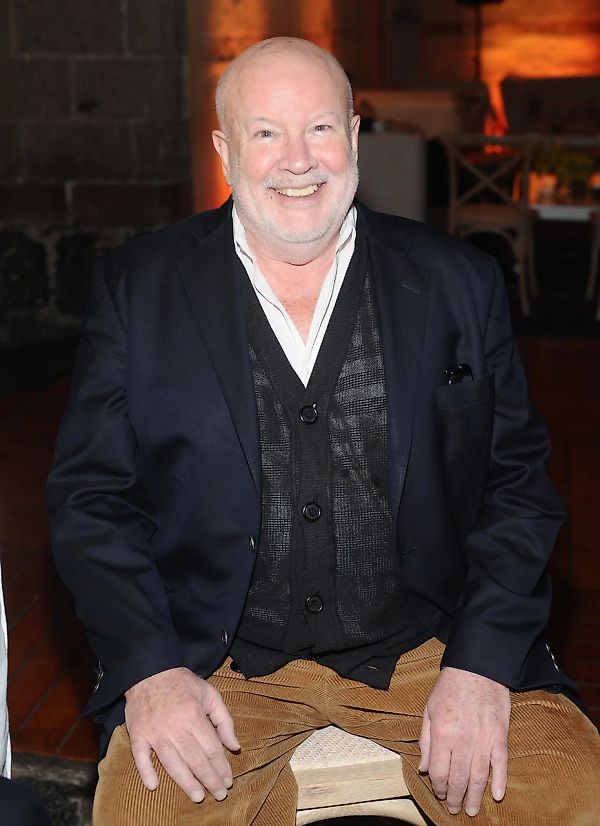
Writer and curator Richard Flood, a onetime managing editor ofArtforumwho brought his keen eye for emerging and cutting-edge art to top curatorial roles at New York’s New Museum and P.S. 1 as well as the Walker Art Center in Minneapolis, died on February 16. He was eighty-one. His death was announced by the New Museum. Flood additionally served as a director of Barbara Gladstone Gallery in New York and taught at the Rhode Island Institute of Art and Design in Providence, the Royal College of Art in London, and the National College of Art and Design in Dublin. “Richard was a truly original character—a curator who thought deeply and passionately about art, a partner to artists who he championed with gusto, and an inspiring and generous mentor to many who had the fortune of working alongside him at the Walker Art Center, and then at the New Museum,” former colleague Clara Kim, chief curator and director of curatorial affairs at the Museum of Contemporary Art, Los Angeles, toldArtforum. “His charisma, wit and highly cultivated eye are evidenced in the memorable exhibitions he curated as well as the writings he left behind. He had a great influence on generations of curators.”
Flood becameArtforum’s managing editor in 1980 before becoming its books editor in 1982–83. Beginning in the early ’80s, he served as a curator at P.S. 1 (now MoMA PS1), where he organized “Beast: Animal Imagery in Recent Painting” (the 1982 group show at which David Wojnarowicz legendarily and without permission released hundreds of cockroaches sporting tiny bunny ears into the museum) and regularly curated fashion exhibitions. Following a stint at Barbara Gladstone Gallery, where he was instrumental in curating a show of work by the Young British Artists, or YBAs, who were just bursting onto the world stage, Flood in 1995 took up the role of chief curator at the Walker. For his first group show there, he presented “Brilliant! New Art from London,” drawing on the Gladstone Gallery show and featuring work by twenty-two YBAs, among them Mat Collishaw, Tracey Emin, Damien Hirst, Sarah Lucas, Gillian Wearing, and Rachel Whiteread. Flood would spend eleven years at the Walker, the last two as deputy director and chief curator, organizing exhibitions including “Zero to Infinity: Arte Povera 1962–1972,” “Robert Gober: Sculpture + Drawing,” and survey of Sigmar Polke; in 1999, he debuted Matthew Barney’sCremaster 2, one of the five works making up the artist’s 1994–2002 “Cremaster Cycle,” there.
In 2005, Flood assumed the role of chief curator at the New Museum, which was expanding. Among the exhibitions he curated or cocurated there were 2007’s “Unmonumental: The Object in the 21st Century” which inaugurated the institution’s new home at 235 Bowery and brought together diminutive or modest sculptures and assemblages; a two-person show ofDaniel Guzman and Stephen Shearer,an exhibition of work by Rivane Neuenschwander, and a group show titled “The Last Newspaper,” themed around works incorporating broadsheets. In 2010, he left his post as chief curator to become NuMu’s director of special projects and curator at large, and in this capacity helped to found IdeasCity, which staged free art programming in cities across the US; and the International Leadership Council, a global ambassador initiative supporting the museum’s programming. Heretiredfrom the institution in 2019.
In addition to his curatorial, editorial, and teaching accomplishments, Flood contributed toArtforumafter his editorial tenure there, and to publications includingFriezeandParkett. A collection of his written work spanning more than four decades is collected in the 2017 volumeRichard Flood: Notes from the Playground.Flood’s work stands apart for its wit and for its fearlessness: He was unafraid of ruffling feathers and could be counted on to offer an unvarnished opinion, a rarity in the art world, of which he took a clear-eyed view.
“Wherever you go, the art world itself is a game about class. The artists have to remain dangerous and the collectors have to be titillated by the danger, and the dealers are the politicians in the middle performing to both sides of the fence,” he toldFriezein 1995. “There is an enormous amount of energy that is brought to the art world by the oppositions that are very carefully maintained within it.”
“Art was his vocation not his career,” critic Hilton Als wrote of Flood on Instagram following the curator’s death. “He had no other choice when it came to its splendors and complications but to love it.”