Artists Face Displacement as Iconic Chelsea Art Building Goes on the Block
165Feb. 5, 2025
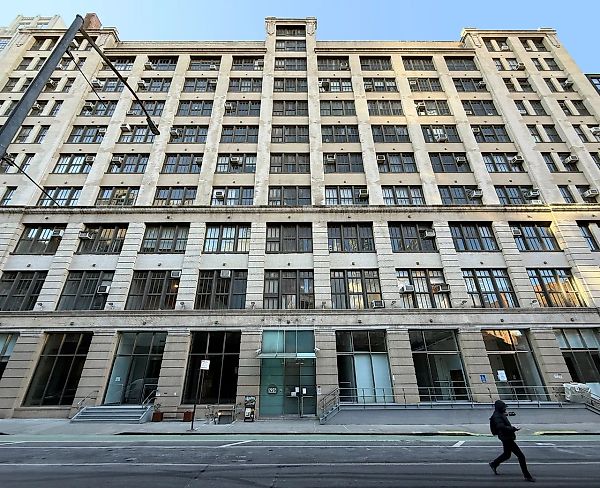
Some two hundred artists and galleries occupying a 400,000-square-foot warehouse in Manhattan’s Chelsea district are reckoning with an uncertain future, as the building has gone up for sale. The massive, many-windowed complex at 508-534 West Twenty-Sixth Street, which housed a printer and bindery following its construction in the early twentieth century, officially hit themarketthis past December following the death of its owner, gallerist Gloria Naftali. TheCommercial Observer, which broke the news, reported that the trustees of a namesake foundation established by Gloria and her husband, Raymond Naftali, are seeking $170 million for the building.
Raymond purchased the warehouse in the 1970s, intending to use it for his garment business; in 1993, the couple began turning it into artist spaces, and Gloria opened the well-regarded gallery Greene Naftali there two years later, partnering with Carol Greene. Raymond, a Holocaust survivor, died in 2003; Gloria died in 2022, stipulating in her will a desire that the building remain welcoming to artists but issuing no legal directive on this point. Derek Wolman, the estate’s attorney, told theNew York Timesthat the building was profitable but “not profitable enough.” The foundation plans to use the proceeds from the sale to fund the causes it supports, which include the arts and initiatives to combat antisemitism.
The Times reported that though some tenants have been there for decades, rent has largely kept pace with the market, with a roughly 600-square-foot space going for $3,000 a month and a 1,650-square-foot studio renting for $8,000 per month. Hyperallergic revealed that many tenants had learned about the sale not firsthand but through the Observer article and noted that the building remains a vibrant arts hub, thanks to its many artist and gallery tenants, the latter of which include Thomas Erben, Alexander Gray Associates, Morgan Lehman, and Galerie Lelong, in addition to Greene Naftali.
Zach Redding, a managing director at Colliers Capital Markets, which is handling the sale, told Hyperallergic that “the foundation is focused on identifying a buyer that will continue to maintain it as a home for the art community.” This rosy fate is hardly a given, however, in light of the neighborhood’s extreme gentrification and proximity to the hyperwealthy Hudson Yards enclave. Chelsea councilman Erik Bottcher and other local elected officials are set to meet with Naftali Foundation representatives to discuss scenarios that would allow the building’s occupants to remain. The tenants, too, are searching for options, with one group banding together to search for a buyer whose dedication to the arts matches that of Gloria Naftali. Other residents have proposed classifying the building as a charitable asset of the foundation and thus exempt from being included in the list of assets the organization must count when calculating its required annual distribution.
“If someone has an idea and they think it can work, and they show us feasibility,” Dominick Porto, a co-executor of Naftali’s estate, told the Times, “by God, I’ll go to bat for it.”