Des Moines Art Center Reaches $900,000 Settlement with Mary Miss to Destroy Her Seminal Land Art Work
176Jan. 16, 2025
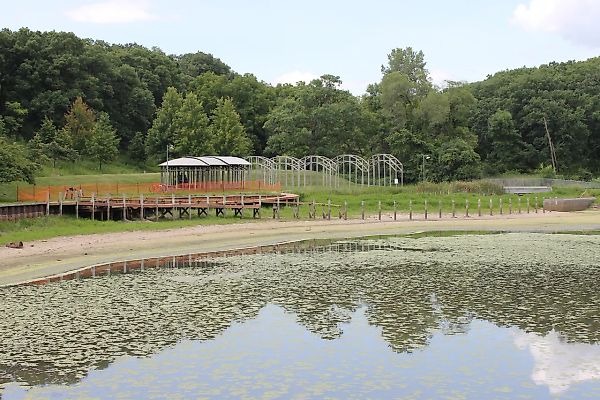
TheDes Moines Art Centerhasreached an agreementwith noted Land artistMary Missthat will allow it to demolish her groundbreakingGreenwood Pond: Double Site, 1989–96, a massive outdoor installation that the museum commissioned from her and then allowed to fall into disrepair. The art center will pay Miss $900,000 and is projected to spend an additional $350,000 to dismantle and remove the work, which is thought to be the first urban wetlands projects in the United States.
The agreement brings to an end asagabegun in December 2023, when Miss was notified by Des Moines Art Center director Kelly Baum that the museum planned to destroyDouble Siteowing to its having become compromised by the elements and allegedly a danger to the public. The artist in April 2024 filed a breach-of-contract suit against the institution, accusing it of having failed to properly steward the work since its completion. Made of treated wood, metal mesh, and concrete, the work comprises a boardwalk surrounding—and at one point dipping into—a lagoon behind the museum, as well as several structures that serve as gathering and resting places. The art center argued that the materials used to construct the work had been subpar and not designed to withstand harsh Iowa weather, and contended that it did not have enough money to fix it. In April, a courttemporarily haltedthe planned destruction of the work while the lawsuit proceeded.
Miss in an interview with the New York Times described herself as conflicted about the settlement, acknowledging that while she was unhappy about the work’s destruction, she was grateful for the attention the fight over its fate had brought to her at a point in her career when she had largely fallen out of the public eye, even despite renewed attention to women Land artists in the past few years. Miss has said she will donate a portion of the settlement funds to the Cultural Landscape Foundation, the education and advocacy group that spearheaded the effort to save Double Site.
Susanneh Bieber, an associate professor of art history at Texas A&M University and the author of a book on American environmental art, expressed disapproval. “This is a tragedy for the field of art history and for the status of art in our society,” she told the Times. “I thought we had arrived at a moment when environmental, ecological art projects that women have created are finally being recognized and valued.”
Nasher Sculpture Center curator Leigh Arnold, who included Miss’s work in a recent exhibition at the Dallas institution, took a similarly dark view, telling the publication, “I fear its demise illustrates our culture’s prevailing attitudes toward complex ideas or situations that necessitate thoughtfulness and tenacity to resolve.”