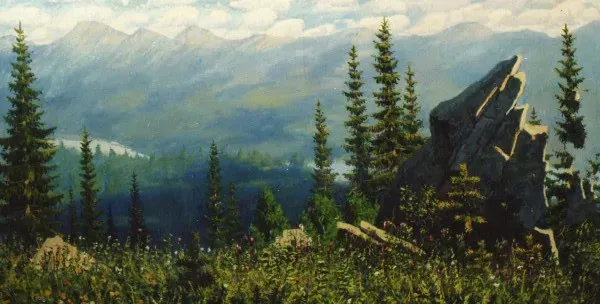
Painting
Anatoliy Nikolayevich Ladnov
People's artist, painter. Born on March 13, 1935 in the city of Miass, Chelyabinsk region. From 1953 to 1958, he graduated from the Penza Art School named after Savitsky under the guidance of teachers N.K. Krasnov and N.V. Dubkov. From 1960 to 1966, he studied at the Moscow Surikov Art Institute under the professors V.G. Tsypakov and A.M. Solovyev. Participant of regional, zonal, republican, all-union, international exhibitions. Many of his works are exhibited in museums in the country and abroad. Since 1966, he has been living and working in Chelyabinsk.
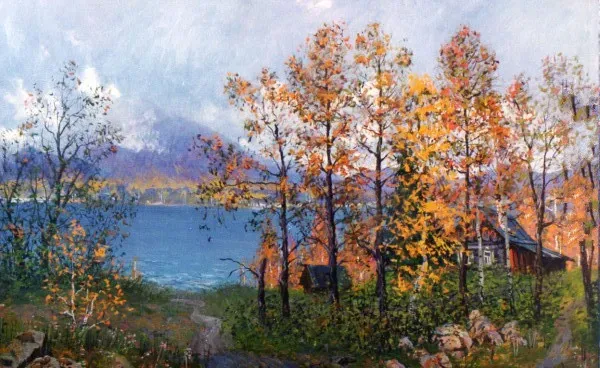
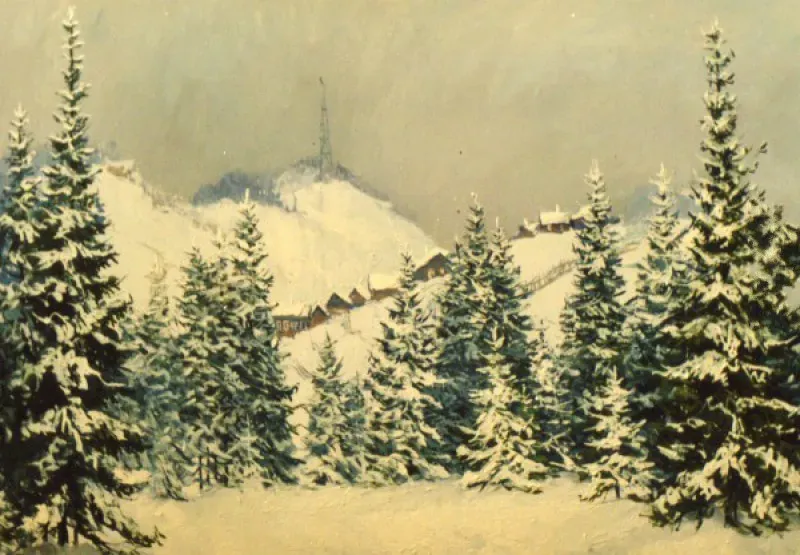
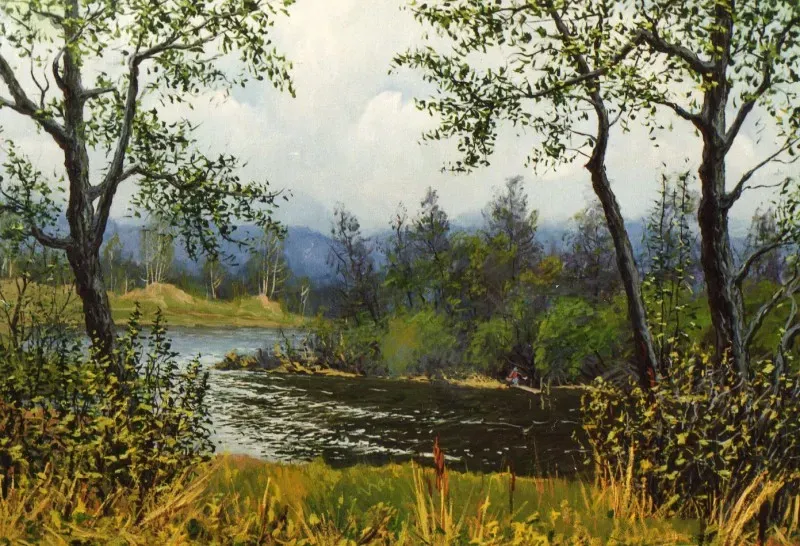
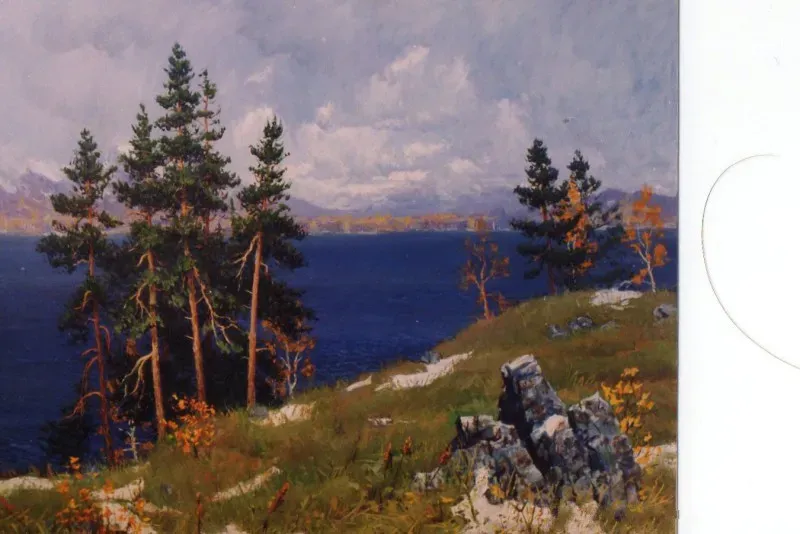
Member of the Union of Artists of the USSR (1970), honored artist of Russia (1998). He received his first lessons in drawing and painting in an art studio. In 1958, he graduated from the Penza Art School named after G.K. Savitsky (teacher N.K. Krasnov). In 1966, he graduated from the Moscow State Surikov Art Institute. He studied under the People's Artist of the RSFSR, laureate of the State Prize of the USSR, professor V.G. Tsypakov. Since 1966, he has been living in Chelyabinsk, working at the Chelyabinsk branch of the Art Foundation of the RSFSR. He was elected a member of the board of the Chelyabinsk Regional Union of Artists for several terms, a member of the art council of the Chelyabinsk Artistic and Production Combine of the Art Foundation of the RSFSR. He taught at the Chelyabinsk Art School. L. works in the genres of portrait, landscape, and genre painting. The civic orientation of L.'s creativity is manifested in the works: "Post No. 1", "At the Gold Mines", "Portrait of the artist E.V. Nikolsky" (1966), "To the Front" (1967); "Eternally Alive" (1969), "Magnitka's First Builders", "First Tractor" (1984), "The Demidovs" (1995); triptychs: "Scorched by War", "The Beginning" (1975). Participant of regional and city art exhibitions since 1966 (Chelyabinsk), zonal (2nd-7th), 1st republican art exhibition "Young Artists of Russia" (Moscow, 1966), 5th republican art exhibition "30 Years of Victory" (Volgograd, 1975), republican art exhibition "Artists of Russia for Children" (Moscow, 1980), republican art exhibition "Around the Native Country" (MoscowIn 1981, Anatoly Ladnov participated in All-Union Art Exhibitions in Moscow in 1967, 1968, and 1982, as well as the "Artists of Chelyabinsk" exhibition in Moscow in 1989. L.'s personal exhibitions took place in Miass (1st in 1973 and 3rd in 1979), Zlatoust (2nd in 1978), and Chelyabinsk (4th-8th in 1985, 1986, 1990, 1992, 1993). His works can be found in museums, art galleries across the country, and private collections abroad. Anatoly Ladnov is a recognized master of thematic easel painting. He is the author of historical and contemporary paintings, psychologically expressive portraits, and emotionally penetrating landscapes. He is the only painter among a group of Chelyabinsk artists who was awarded the honorary title of "People's Artist of Russia" in 2007 for his selfless and fruitful creative work in the field of visual arts. The exhibition, held in the Exhibition Hall of the Union of Russian Artists, marks the artist's 80th birthday. And, to our delight, the artist is as energetic, lively, emotional, and productive as ever. The main part of the paintings presented at the exhibition are the results of his work in the past few years, and they are being shown to the public for the first time. Ladnov's inexhaustible creative energy, determination, and mobility, his tirelessness, tremendous hard work, high demands of himself, selfless and courageous dedication to art, serve as a worthy example for the contemporary young artists. Persistently and consistently, day after day, month after month, he is fulfilling the goal he set for himself in his youth. He continues to work, regardless of health problems, problems with the environment, and problems in the country that suddenly destroyed not only the long-standing system but also depleted all his work savings. His strong sports training helps him in this.I have a character. He is not relaxed by the recognition and well-being he has achieved. He is not inclined to "rest on his laurels" at the age of 80. He sets new goals for himself, new tasks, and successfully solves them. Tirelessly takes on big canvases. Systematically and consistently completes them in his workshop. And only when the dominance and chaos of the city push him to the limit, he, in his own words, escapes to nature to paint studies. Each time, with the greed of a hungry person, he rushes to the first, most unpretentious natural motif he encounters and cannot stop. Regardless of the season or the weather forecast, he speeds off in his trusty Uazik to secluded places. He himself is from Miass. He has written countless pieces here, seemingly every little song. Often, rising at five in the morning, he manages to capture the mystery of nature's awakening. He is passionate about searching for new artistic discoveries in the ordinary, seemingly familiar, and long seen by everyone. He writes with enthusiasm, with a phenomenal speed that has become legendary. Anatoly Ladnov rejects all offers to use photography when working on landscapes, which has become popular among artists recently. He makes 5-6 trips for studies every year, at different times of the year, bringing back dozens of complete landscapes. Considering them only as handy auxiliary material for working on genre pieces, the artist clearly underestimates the value of this genre in his own work. With a sensitive soul, he captures the subtle poetry of the Ural landscape: a simple village street with neatly painted houses, in the deserted calmness of the wilting under the scorching rays of the sun; the outskirts of a village peering through the transparent greenery of newly sprung leaves; the dense thickets of a forest pierced by the sun breaking through the thickness.With a beam. He manages to convey the poeticism of the melting silver of the morning lake, the richness of color saturated with moisture, the exposed bright attire of the autumn forest. In Anatoly Ladnov's landscapes, water sometimes rushes with noise and turbulence over rocky rapids, sometimes glides smoothly with a rhythmic smoothness along the forest banks, and sometimes reflects the overturned sky as a mirror of the lake. It is present as a symbol of the world's variability in most of his landscapes, attracting the artist with its mysterious depth like a magnet. Anatoly Ladnov enjoys capturing moments of nature awakening, when the pre-dawn silence and tranquility are suddenly broken by the chirping of birds, and the deep darkness explodes with the fireworks of color as the first rays of sun burst from the horizon, illuminating the tops of fir trees and the distant shores of the lake, igniting a fire of a blossoming morning. In his landscapes, one can feel the silent passage of time over the sleeping, dilapidated country houses in the midst of the grand celebration of nature. Anatoly Ladnov's landscapes awaken in us a sense of the familiar homeland landscape, the native poetry. They help us, who are constantly on the go, to stop for a moment and remember familiar songs, remember who we are, where we come from, where our roots are, what is in our genes. He maintains a connection with Russian writers, poets, and artists in harmony with their high feelings and thoughts, with their sensitive attention to everything that happens in nature. Ladnov, in his works, reveals himself as a lyricist. He sees poetry in the ordinary - "the poetry of life." His painting is a direct continuation of the traditions that trace back through his teacher V.G. Tsypakov to the great Russian artists B.V. Ioganson, I.E. Grabar, and even V.I. Surikov. As a graduate of the painting department of the Moscow Academic Art Institute named after V.I. Surikov.Anatoly Ladnov carefully preserves the traditions of the Russian realistic school of painting, embodying them in his works. A magnificent portraitist, as evidenced by the canvas "In the Studio" (2010), he effortlessly works on still lifes, abundantly represented at the exhibition. The artist persistently sets himself the task of creating large genre canvases. The artist's constant theme is the life of ordinary inhabitants of his native land. The current cycle is also "Ural". "Rowan Beads" (2010) is warmed by the charm of village girls, playful and mischievous, tying a simple decoration in the variety of autumn grasses. "Blacksmith Shop" (2010) is filled with warm memories of his childhood, of his grandfather's blacksmith shop, respect for the memory of his extraordinary grandfather, capable of shoeing a horse without being tied to a stand. In the "Blacksmith Shop" you can sense the Ural landscape, which determined the future life of the artist from his early childhood. His works are recognized by his unique artistic handwriting and temperament. They are beautifully solved tonally, revealing the author as a virtuoso draftsman. In Anatoly Ladnov's works, there is a keen sense of striving to serve the ideals embodied in classical art. All this gives his works the value that is characteristic of genuine art.