Silver
Fabergé
In 1882, the young but already famous jeweler Karl Fabergé (1846-1920) participated in the All-Russian Art and Industrial Exhibition in Moscow, where he received a gold medal. It was a complete success, despite the fact that he presented his products for the first time in such a prestigious competition in the fields of art and industry, and competed with famous firms such as "K. E. Bolin", "V. S. Makholov", enterprises of Pavel Ovchinnikov, Ivan Khlebnikov, and Wilhelm Adler.
In 1885, Karl Fabergé was permitted to be called a supplier of the Imperial Court, and five years later he was granted the title of appraiser of the Cabinet of His Imperial Majesty. The years of international recognition for the firm were the 1880s and 1890s, during which Fabergé gained many admirers of his talent abroad. His international debut at the Nuremberg Exhibition in 1885 earned him a gold medal. At the Northern Exhibition in Copenhagen in 1888, Fabergé was also awarded a gold medal and an honorary diploma for presenting products outside of the competition. As a result of the Northern Art and Industrial Exhibition of 1897 in Stockholm, he received the title of Supplier to His Majesty the King of Sweden and Norway. Karl Fabergé represented the field of gold-silver and jewelry abroad with dignity - the branch of the artistic industry in which, according to popular opinion, the Russians were unparalleled in Europe.
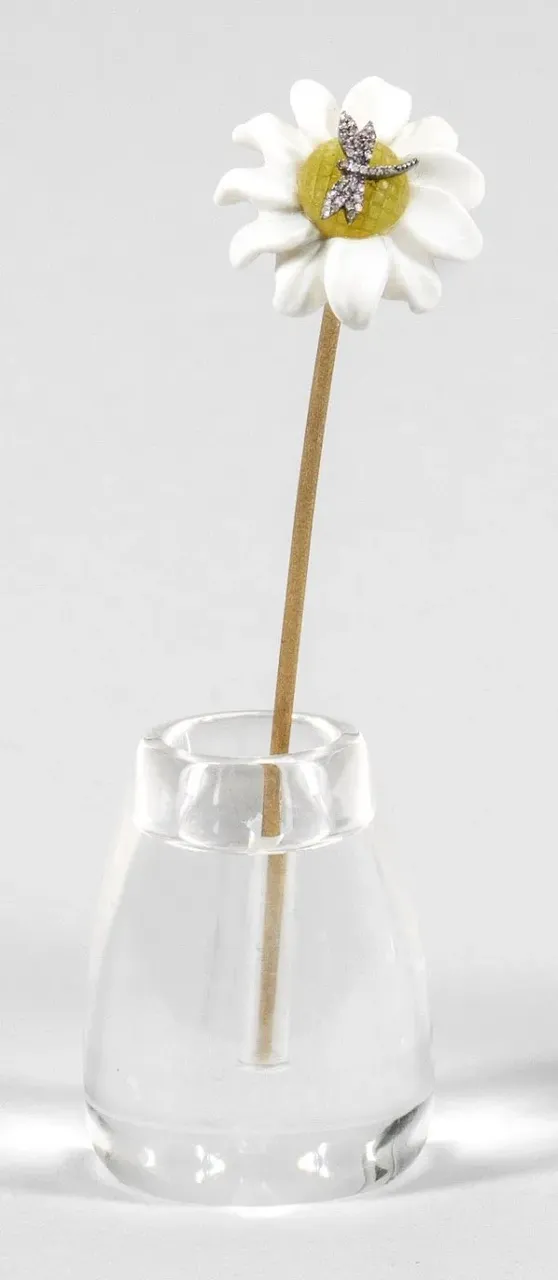
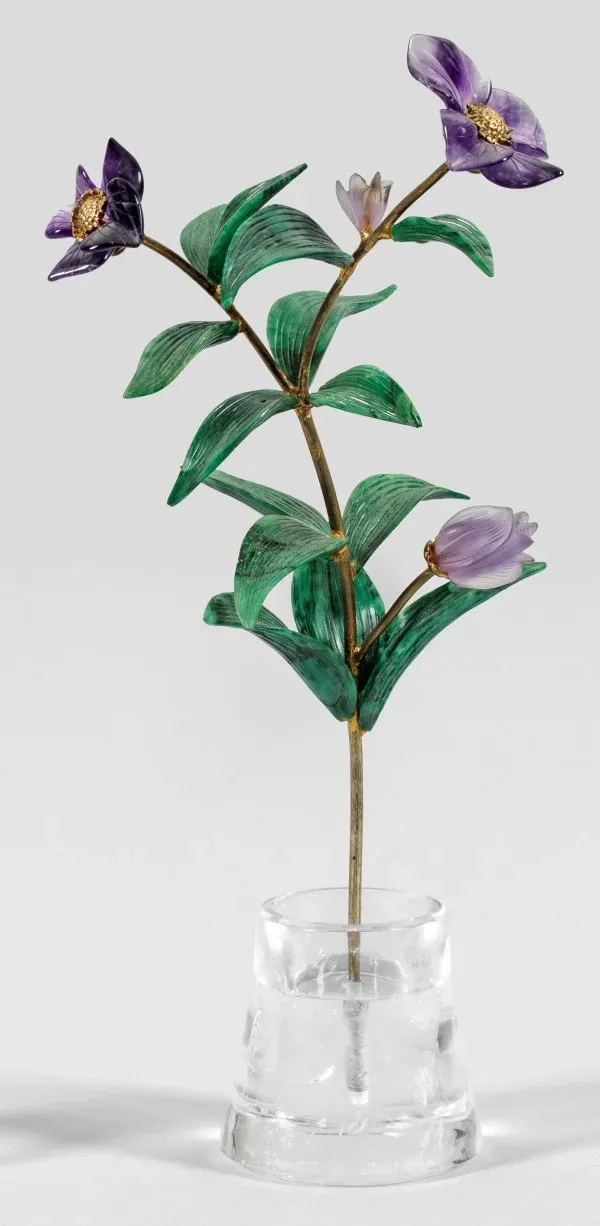
At the World Exhibition of 1900 in Paris, Karl Fabergé, along with outstanding French masters, was a member of the jury for the class of precious jewelry and costume jewelry. At the same time, his works were exhibited outside of the competition: Easter eggs provided by the imperial family, miniature copies of state regalia, jewelry, gemstone carvings, and precious flowers in crystal vases, which were highly successful among Parisians and visitors from all over the world. For his skill, he was awarded the highest French order of the Legion of Honor and a bronze medal of the exhibition. All of his achievementsThe merchandise intended for sale was sold out by exhibition visitors, and some time later European manufacturers began producing products that imitated the fashionable but quite expensive items by Karl Faberge. Gustav Faberge, a native of the city of Parnu, who founded a jewelry business in 1842, could hardly have imagined that it would achieve such brilliant development. It was thanks to his son Peter Carl, initially part of the family business and its capital, who took over the family business in 1872. Under his leadership, a small workshop and store in the Admiralty District of St. Petersburg turned into one of the largest jewelry enterprises in Russia with branches in Moscow, Kiev, Odessa, and London. Karl Gustavovich, who received a good artistic and commercial education, was a jeweler, artist, restorer, and, most importantly, a talented entrepreneur. He managed to attract the best jewelers, miniature artists, sculptors, painters, and architects from St. Petersburg and Moscow to collaborate. The main workshops were located in St. Petersburg, in a house on Bolshaya Moskovskaya Street, built by the architect Karl Schmidt, a relative of Faberge. Some craftsmen worked in their own premises and were connected with Karl Faberge through a system of contracts. Many of his works were based on artistic ideas of his younger brother Agafon, but the most significant role in the company's affairs was played by Karl Faberge's four sons: Yevgeny and Agafon, who practically managed the St. Petersburg branch together with their father, Alexander, who headed the Moscow branch, and Nikolai, who worked in London. Many of Karl Faberge's pieces were considered not only as precious goods but also as artistic treasures of museum quality even during his lifetime. In 1902, a luxurious exhibition was held in Baron von Derviz's mansion, which was visited by many residents of St. Petersburg. Faberge's artistic works from the collections of members of the imperial family and private individuals were displayed there alongside.about antique snuffboxes and miniatures, which indicated the high status of the company's products.
Owning elegant luxurious trinkets from the famous jeweler of the Russian court became something like a distinction, evidence of belonging to an elite circle. Buyers of items with the hallmark "K. Faberge" were crowned individuals, representatives of the titled nobility, the financial and industrial elite from around the world - from St. Petersburg to Bangkok. The Faberge jewelry enterprise became the first Russian company to penetrate Siam: to this day, the chambers of Thai monarchs are adorned with a jade Buddha created by its masters.