The famous French manufactory Daum dates back to 1878, when lawyer Jean Dom, who had no experience in glassmaking, took over a small glass factory in Nancy as payment for an unpaid debt. His two sons soon became business partners. The clear guidance and creative talent of his sons, Antoine and Auguste, gave the business a new economic scale and a revolutionary artistic approach. Production expanded from simple tableware and glasses to internationally recognized and collected decorative glass masterpieces. In 1891, a coincidental gathering brought together the Dom brothers, Louis Majorelle, artists Victor Prouvé and Émile Gallé in the small French town of Nancy. Through their collaboration, the astonishing Art Nouveau style emerged, which was later used not only in architecture and interior design, but also in fashion and accessories. In 1900, Daum's works became popular and received the Grand Prix at the Universal Paris Exhibition, which officially marked the beginning of the Art Nouveau style. The introduction of electric lamps with lampshades made of multi-layered painted glass caused a sensation. The products stood out for their depth of color, elegant forms, unconventional texture to the eye, and the use of stylish floral ornaments. A year later, the talented community attracted architect Eugène Vallin and organized the "Nancy School." In the following decade, glass masterpieces became part of private collections and are now sold at auctions for a staggering price. For example, a Daum table lamp made in collaboration with renowned designer Louis Majorelle was sold at a Sotheby's auction in 1989 for $1,760,000. In the early 1920s, Daum changed its direction and introduced geometric sharp shapes into glass, which became a distinctive feature of the upcoming Art Deco movement. At the 1925 exhibition, the company caused a sensation once again, receiving a order for its products.Creation of dishes for the famous liner "Normandie". It is worth noting that each generation of the Nancy house heirs added their own touch to the style of new collections. Thus, in 1925, Paul Dom, the son of Augustin, became one of the first advocates of the Art Deco style. The smoothness of vegetal ornaments, drop-shaped forms, translucent-matte paints of Art Nouveau were replaced by generous ethnic patterns, geometric forms, and modern materials. By the end of the 1930s, the factory began working not only with glass but also with crystal.
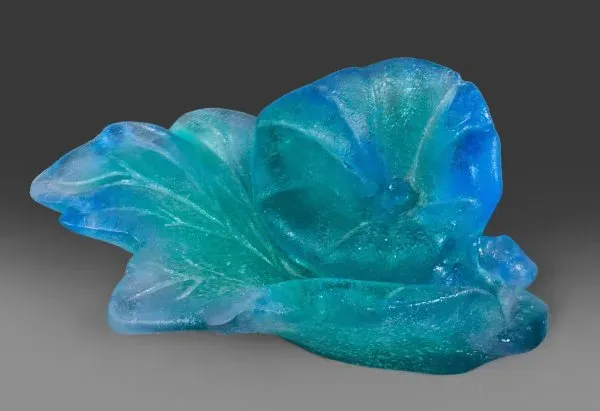
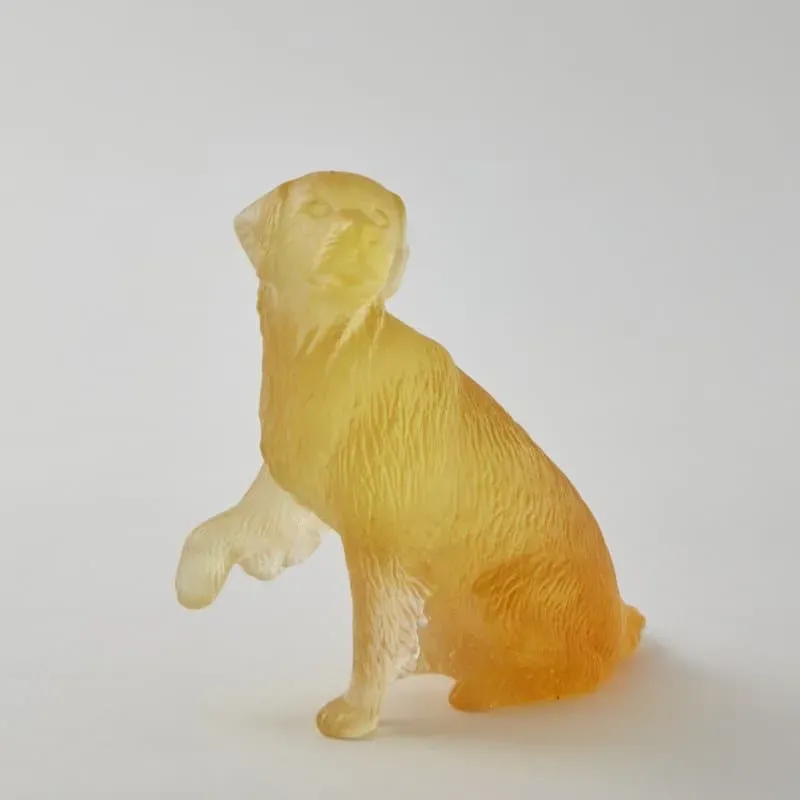
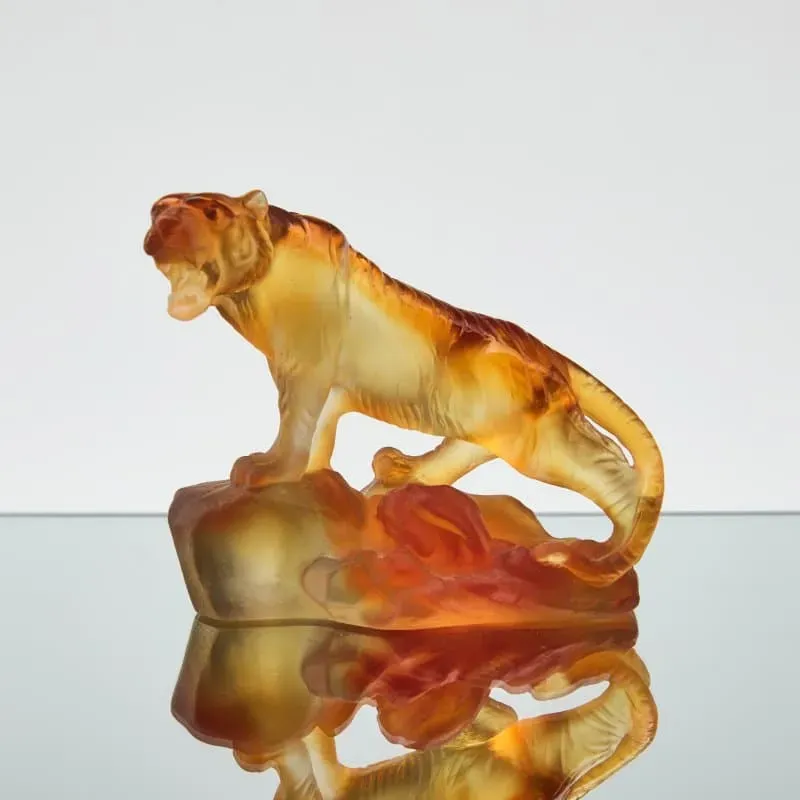
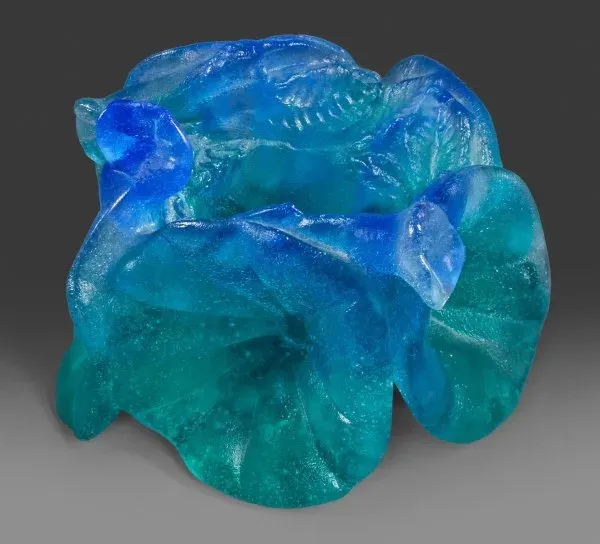
In 1968, Daum revived the ancient technique of "pâte de verre" known as glass paste, which very soon became the brand's hallmark. The essence of the method, whose roots go back to ancient Egyptian art, is that pieces of colored glass and crystal are baked inside a fire-resistant mold, accurately reproducing its contours.
This gives an amazing texture and allows achieving complex and always different color transitions. The crystal becomes dense, not completely transparent, heavy, resembling more like stone - bright and glowing from within. The company made it a rule to invite contemporary and iconic artists of their time - among them Salvador Dali, Paloma Picasso, Cesar, Bonetti, and Arman. Not wanting to lag behind modern trends, today the brand collaborates with Philippe Starck, Hilton McConnico, and Richard Orlinski. Daum products are known and desired no less than the works of Galle, Tiffany, and Lalique.