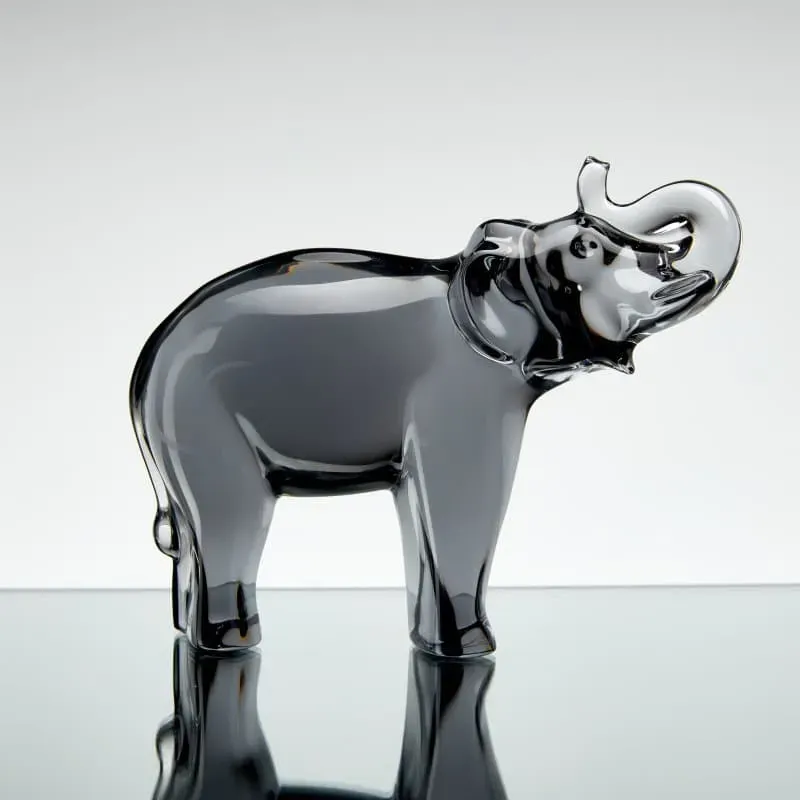
Glass, crystal
Baccarat
Each era has its own peculiarities, and any product is endowed with the characteristics of the historical period in which it was used. There is no better example to see how the most powerful Baccarat enterprise has changed, improved, and strengthened itself today. Over two hundred years of creativity and titanic work. Truly, it deserves attention and respect! It all started in the small village of Baccarat (France), where, by the grace of King Louis XV, an order was given to open a factory for the production of glassware. In 1816, 52 years after the foundation of the glass factory, industrialist Emme-Gabriel D'Artig acquired the manufactory and put into operation the first furnace for the production of heavy refractive crystal glass. A few centuries ago, only crowned individuals could afford the luxury of crystal, so the main customers of the factory became the high-ranking families of France. With the support of the monarch, the factory steadily increases production and expands beyond the country's territory. Starting in 1830, it regularly supplies chandeliers, candelabra, lamps, services, and hookahs to Constantinople. In 1832, the Baccarat, Saint-Louis, and Choisy-Le-Roy crystal factories merged into the trading community Launay, Hautin & Cie, which began publishing an illustrated catalog of products. In 1841, the first "Harcourt" collection was developed, which still exists today. From 1855 to 1978, the Baccarat brand won three gold medals at world exhibitions. In 1857, the company underwent another restructuring, and only Baccarat remained, which in 1860 registered its trademark with the Commercial Court of Paris and consistently used it until 1936. Starting in the mid-1880s, Baccarat opened branches in Asia and America, and since 1896, it began accepting orders from Russia. In 1900, one of the three furnaces and almost a thousand workers of the Baccarat company were engaged in fulfillingOf the crystal orders coming from the Russian Empire. The Romanov dynasty was a lover of French glass. Seeing crystal chandeliers, goblets, and vases in Paris in 1896, Emperor Nicholas II was forever captivated by the talent of Baccarat masters. For him, the grand "Candelabra of the Tsar" was created, with 79 lamps and a height of 3.25 m (now exhibited in the Baccarat Museum in Paris). Various crystal tableware, vases, candlesticks, and candelabra were supplied to the royal court. Following the emperor's lead, courtiers ordered similar items for themselves, acquiring sets with diamond tips or with a plant ornament in the form of a palm leaf. French products were transported to Russia by caravans over land and sea and were very popular. Unfortunately, most of the items were broken and lost during the revolution. After the establishment of Soviet power, beautiful things ceased to be a part of people's lives, and the market was completely shut down. Only in 2001, the company opened a boutique in Moscow, where glasses, vases, lamps, jewelry, and perfumes were showcased in giant display cases. For over two hundred years, Baccarat has set the highest standards, developing the strong aspects of decorative art. Glass masters in their pursuit of creating beauty transformed ordinary, purely utilitarian items into works of high art: glasses, vases, jugs, and goblets. In 1839, the manufactory first exhibited products made of colored crystal. Since then, the colorful palette shines with soft aquamarine and tangy pink, amethyst and amber color, the magical color of "onyx" - black crystal. Its components are kept strictly secret. Carved goblets were distinguished by a high leg with decorative design, richly decorated with enamel and gilding. Over the years, the factory's styles changed in accordance with the spirit of the times, fashion trends, and technological advancements. In 1841, the Baccarat signature appeared for the first time.The first creative style is Harcourt. The distinctive feature of the products was the architectural style with characteristic trimmed flat edges. The classic shape has the necessary Harcourt configuration - a regular hexagon with exquisite slanted cuts. The Harcourt collection consists of decanters, pitchers, flagons, glasses, and goblets. The style remains unchanged today. In the 19th century, the unique art of Japan and China conquered European territory. Baccarat Factory did not stand aside and logically incorporated non-traditional images into its whimsical creations. Floating carp, falling leaves, frozen moments of life - all of this found embodiment in Japanese style collections. At the same time, multicolored enamels appeared, glass engraving improved. The virtuosic decorative treatment technique, reaching the level of genuine masterpieces in many products, allowed the factory to fulfill orders for Guerlain, Coty, Houbigant, Bourgeois. Elegance and refinement of crystal found embodiment in the famous jewelry of Baccarat. Gold and silver necklaces, earrings, rings, necklaces in combination with crystal brought the factory fame and allowed it to confidently stay afloat among the best. The secret of success lies in the diversity and flexible management policy, in the ability to think creatively and not be afraid to experiment. The Baccarat House for young ladies released an unusual line of jewelry in Gothic style, focusing on silver and black crystal. But for discerning ladies, the classics remain unchanged, so pearls in combination with crystal in gilded finishes will delight at all times. Today, the range of Baccarat House products is so wide that it is difficult to list all the items. Along with tableware, lamps, candy dishes, bottle stoppers, caviar servers, champagne buckets, and souvenirs are successfully sold. For the New Year holidays, you can spoil your loved ones with Christmas decorations made in the style ofThe lights, table lamps, chandeliers, and candleholders continue to be popular, distinguished by their perfect shape and charming design. Despite its respectable age, Baccarat Company stands out for its progressiveness and conceptual novelty, which allows it to confidently celebrate its products with a trademark for more than a hundred years. In 1860, the Baccarat stamp was patented for the first time. It remained unchanged until 1936. Since 1936, Baccarat has a new signature - acid etching or engraving, the full name of the company in capital or lowercase letters.