Porcelain, earthenware, ceramics
Sevres porcelain
At that time, thanks to the Jesuit missionary François Xavier d'Entrecolles, who had lived in China for many years, the French already knew about the "secret ingredient" of hard porcelain - kaolin. But, unlike Saxony, white clays of the necessary composition were not found in the vicinity of Paris. Until the development of kaolin deposits near Limoges, in the late 18th century, the Vincennes factory continued to work with soft "paste".
Orry de Fulvi wanted to create domestic production that would not be inferior to Meissen. However, the first attempts to improve the formula of Vincennes porcelain ended in failure. The products were mass deformed due to uneven firing and poor quality raw materials, which brought the manufactory to the brink of bankruptcy. The situation was saved by another former Chantilly employee - Louis François Grave. It was he who was able to reveal the best qualities of the soft "paste", thanks to which sculptures and ceramics from it almost equaled Meissen analogues.
The Du Bros brothers, who did not achieve any success, soon left the Vincennes manufactory, but Grave stayed. In 1745, the enterprise acquired a powerful patron in the person of King Louis XV, receiving the exclusive privilege "to make porcelain in the style of Saxony, painted and gilded, as well as images of human figures". Until 1753, imitation of Meissen style continues, which serves as a model for emerging European manufactories. However, at the same time, French masters begin to search for their own "face", relying on the properties of the soft "paste", which has great plasticity andwith expressive texture.
In 1748, the wife of Louis Gravant - Marie-Henriette Mill, established the production of porcelain floristry at the manufactory. She also borrowed the idea from Meissen, but in the soft "paste," the flowers turned out to be truly "alive," which the Saxons could not achieve. The petals and leaves were naturally curved, accurately copying natural analogues, and the color amazed with its variety and subtle transitions of shades that did not fade at relatively low firing temperatures.
Roses, peonies, lilies, tulips, anemones, and hyacinths were bought by the marshan-mercier - the predecessors of modern decorators who furnished the aristocratic living rooms of the "galant era." The flowers were attached to gilded bronze stems, and then used to decorate sconces, candelabras, multi-armed chandeliers, or made into table bouquets. Vases for such compositions were also produced at the manufactory.
Around twenty young women were engaged in molding flowers under the guidance of Madame Gravant. It was believed that their hands were better suited for the delicate craft than men's. When women were banned from working at the factory in 1755, they continued to mold flowers at home, although transporting fragile, unburnt flowers was associated with great risk.
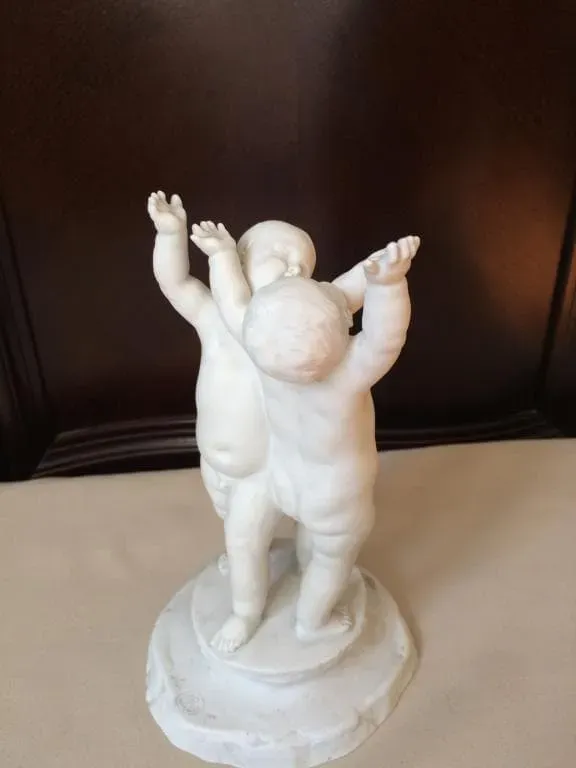
In 1751, the artist and sculptor Jean-Jacques Bachelier, responsible for the painting and glazing of the products, for the first time tried to leave the sculptural groups untouched after the first, so-called biscuit firing. The statuettes with their delicate texture and warm creamy shade resembled marble. They required great skill and attention to detail since neither glaze nor painting concealed surface defects, and expressiveness was achieved only through the play of light and shadow.
Biscuit porcelain was non-functional and was exclusively used for small sculptures - vessels made from it allowed water to pass through and easily absorbed dirt. The French aristocracy highly valued this novelty, despite its costliness and the difficulty of maintenance. Later, biscuit decor began to be used.Many manufacturers of delicate ceramics, including the English factories Wedgwood and Minton. Patronage of Madame Pompadour In April 1748, de Füllwi presented Maria Josepha of Saxony, the second wife of the Dauphin Louis Ferdinand, with a Rococo-style vase with three elegant figurines on a gilded bronze pedestal as a gift. The main decoration of the composition was a huge porcelain bouquet consisting of 480 flowers. The overall height of the item reached 90 cm, and the meticulous craftsmanship of the details amazed the witnesses. As the court historian Duke de Luynes wrote in his memoirs, "dazzling whiteness and fine execution testify that our manufacture surpasses Meissen in the production of flowers." In April 1748, de Füllwi presented Maria Josepha of Saxony, the second wife of the Dauphin Louis Ferdinand, with a Rococo-style vase with three elegant figurines on a gilded bronze pedestal as a gift. The main decoration of the composition was a huge porcelain bouquet consisting of 480 flowers. The overall height of the item reached 90 cm, and the meticulous craftsmanship of the details amazed the witnesses. As the court historian Duke de Luynes wrote in his memoirs, "dazzling whiteness and fine execution testify that our manufacture surpasses Meissen in the production of flowers." The Dauphin was also delighted with the gift and immediately ordered a copy for his father, Frederick Augustus III, the Elector of Saxony. He was the son of Augustus the Strong, whose efforts led to the opening of the first hard-paste porcelain factory in Europe. However, the biggest fan of Vincennes became the mistress of the French king, Marquise de Pompadour. Louis XV ordered 800,000 pounds worth of porcelain flowers, which were then used to decorate the orangery and rooms in her chambers. It is said that during winter, Madame Pompadour invited the king to the garden and showed him a blooming flower cluster, emitting a delightful scent. It turned out she had replaced real roses and lilies with porcelain ones for authenticity by spraying them.The spirits created by hand became the pride of their petals. In this way, Pompadour was able to increase Louis XV's favor towards the flagship of French thin-walled ceramics.
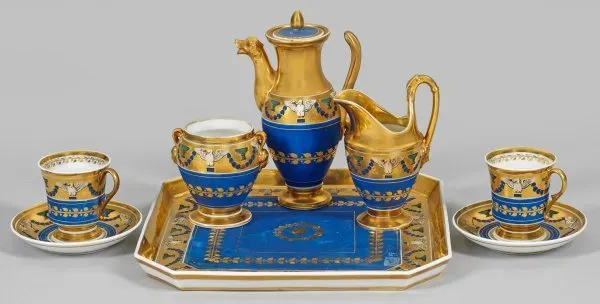
When de Fulvi unexpectedly died in 1750, the king continued to support his factory with regular orders. However, it was Madame Pompadour who was responsible for creating the image and promoting the products. Experiments with colored glazes were conducted using her funds, which in the future brought worldwide fame to the factory. The chemist and scientist Jean Ello developed enamels of bright, juicy shades that did not fade during firing. These included "royal blue," "lapis lazuli," turquoise, sky blue, green, and, of course, the famous "Pompadour pink," named after the royal favorite. A certain monk named Hippolyte le Foyer shared a special recipe for gilding with subsequent firing at low temperatures, giving the products both elegance and richness, characteristic of the Rococo style.
By securing the support of Louis XV, the Marquise de Pompadour did everything possible for the further prosperity of Vincennes. She adorned her and the royal private apartments with vases and decorative ornamentation, which inspired the highest aristocracy to follow her example. The motto proposed by the enterprising marquise: "Whoever does not love my porcelain does not love France," served as a clear indication to the courtiers, so there was no shortage of orders for the factory.
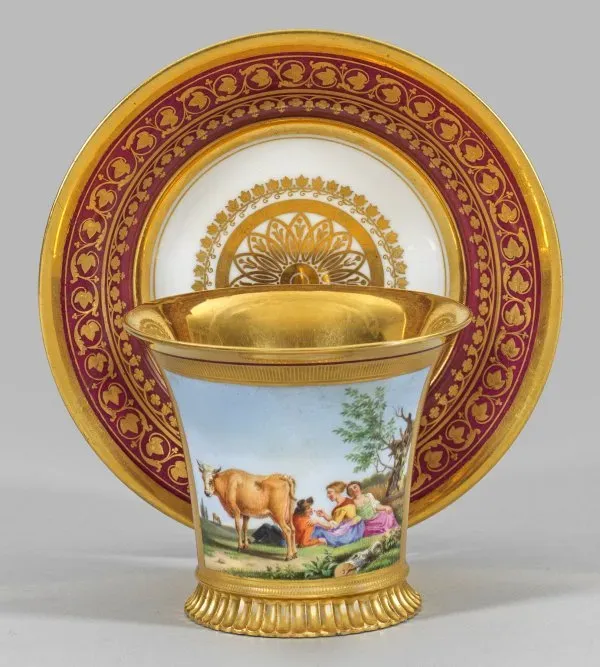
In 1753, the king allowed Vincennes to use his monogram - two crossed and mirror-reflected letters "L" at the bottom of the products. This raised the prestige of the factory internationally and attracted the attention of other European monarchs. In particular, the Russian Empress Catherine II ordered the "Cameo Service" for her favorite, Prince Grigory Potemkin. Today, the unique turquoise-colored dining ensemble of over 700 pieces is located in the Hermitage Museum, along with other masterpieces of Sevres porcelain. Although the production of the Catherine the Great service was still in Vincennes at that time."With the growth of production, the previous premises became cramped. It was decided to move to Sèvres, in the southwest of the Parisian suburbs, closer to the Château de Bellevue, belonging to Madame Pompadour. At the initiative of the influential patron, a new four-story building in the classical style was built for the factory. In 1759, the king bought the now Sèvres Manufactory and, with the help of strict measures, protected it from possible competition. Other porcelain factories were prohibited from polychrome painting and gilding, as well as the production of small sculptures. In addition, by a special decree of Louis XV, he ordered the popular silverware among the aristocrats to be melted down to increase demand for fine ceramics." "In 1768, near Limoges, in the village of Saint-Yrieix-la-Perche, kaolin deposits were discovered. Three years later, Count de Tilly de Mailly, who had been studying ceramics in Saxony for a long time, informed the Royal Academy of Sciences about the creation of hard porcelain in France, following the example of Meissen. In 1770, the king took control of the Limoges deposit in order to transfer it as raw material to the Sèvres Manufactory. However, the company finally abandoned the soft "paste" only in 1804. Today, fritted raw materials are used in individual cases for exclusive orders." "Since 2009, the former royal manufactory has been under the patronage of the French Ministry of Culture and Communication. The official Sèvres website emphasizes that its task is to preserve the traditions of elite porcelain by producing unique works of art. The company's assortment includes models made from fine porcelain, as well as decorative objects, tableware, and jewelry."The text talks about the history and work of the Sevres Porcelain Factory in France. It mentions that the factory has a staff of only 120 ceramists who must master around 30 related professions before they can start creating porcelain masterpieces. Sevres has never engaged in producing "mass-market" products. Every year, the factory produces a few thousand pieces, some of which decorate the residences of the country's top leadership, such as the Elysee Palace, the Matignon Hotel, and the Rambouillet Castle. The rest of the items are sent to two galleries - one in Sevres and the other in the 1st arrondissement of Paris, as well as being exhibited at the FIAC fair and prestigious exhibitions. The accompanying photos show modern Sevres porcelain vases and figurines, which are less well-known than their counterparts from previous years. The French Revolution and Napoleon Bonaparte's rise to power had a negative impact on the luxury industry in general and Sevres in particular. In the late 18th and early 19th centuries, the factory's warehouses were filled with unsold products: biscuit sculptures and "white ware," meaning white-glazed but unpainted vases and dinner sets. To stay afloat, between 1813 and 1850, these stocks were sold at low prices in auctions and lotteries. Over 33,000 porcelain blanks ended up in the hands of private artists, who painted them and then sold them as original products. Today, genuine 18th-century Sevres porcelain is extremely rare. At best, what one finds are high-quality copies made a century later by less famous brands. A notable example of such imitation is the Parisian factory of Edmé Samson, founded in 1845. The manufacturer claimed to specialize in reproductions of Sevres and Meissen porcelains, but antique dealers call his products "counterfeits," although very skillful ones and therefore not much cheaper than the originals. In 1880, Samson & Cie began adding their own mark "Ss" to the imitation mark. However, this overglaze inscription could easily be erased, so collectors often can't be sure.It can only be determined by a specialist whether he is in possession of an original or a fake. A collector who purchased Samson & Cie instead of an original Sèvres can still consider himself lucky. In any case, high-quality porcelain items from the 19th century increase in value over time, even if they are imitations of prestigious brands. It is possible to buy restored statuettes or decorative objects, but considering that their liquidity is lower than that of fully preserved items. To protect oneself from Chinese replicas, representatives of the Sèvres factory recommend paying attention to the following details: During the "royal period," production years were stamped on the marks of Sèvres porcelain. Not only with numbers, but also with a letter in the center of the monogram of Louis XV. Such marking is characteristic only of "soft paste." Starting from 1762, the stamp takes on a new form, the monogram disappears, but the inscription "Sevres" appears, which has been preserved in one form or another to the present day.