Porcelain, earthenware, ceramics
Royal Dux ( Bohemia )
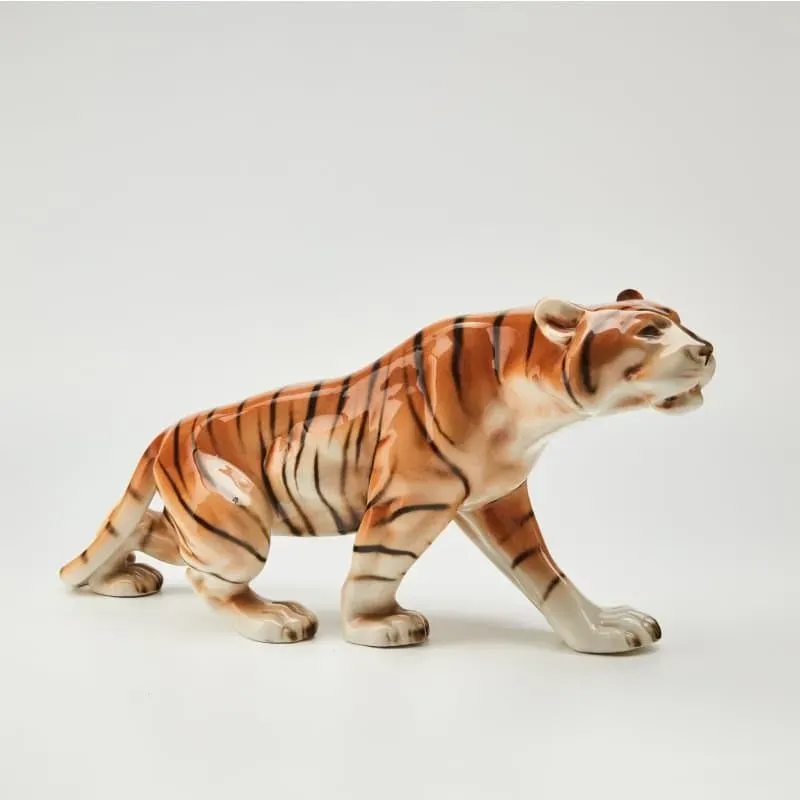
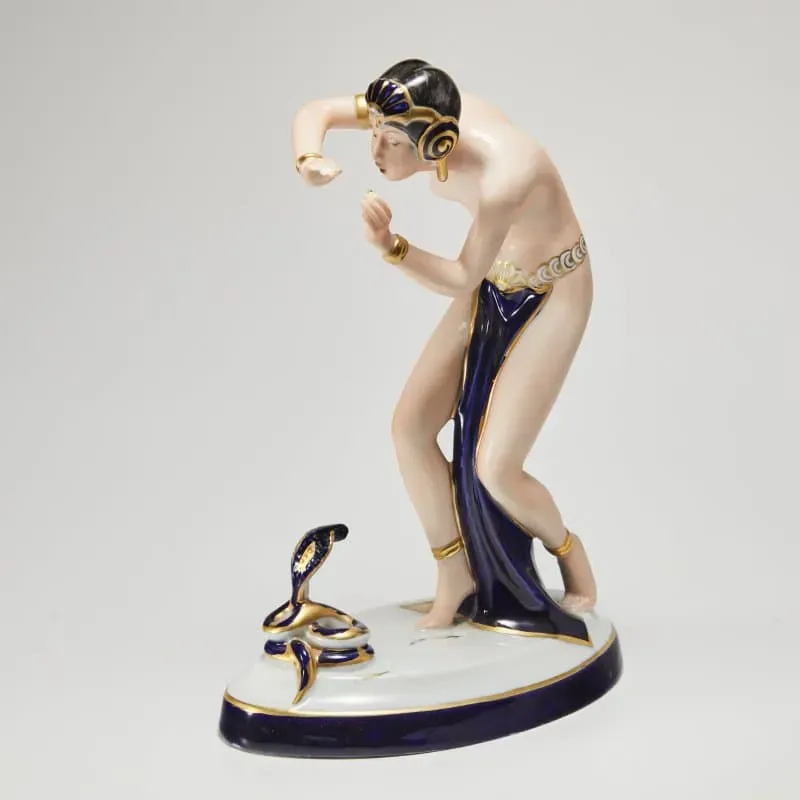
Among the manufacturers of porcelain, Royal Dux Bohemia (Austria-Hungary) occupies an honorable place. For over a century and a half, coffee sets, plates, cups, dishes, vases, and figurines have been produced under this well-known brand. Today, one of the largest collections of ceramics is located near the border of the Czech Republic and Germany, not far from Karlovy Vary, in the Klášterec nad Ohří Castle. This collection showcases the works of Chinese craftsmen as well as the earliest examples of Czech porcelain, produced from the 18th century to the present day. Bohemia - the original name of the region where Czech Republic was formed, and during the period from 1526-1918 - the official name of Czech Republic, which was part of the Habsburg Empire. It was here, in 1853, that several small factories operated, one of which was purchased by a modeler named Eduard Eichler in seven years and opened "E. Eichler Tonwaren-Fabrik." In 1862, he made the purchase of a factory in Schelten and actively expanded production. Initially, the factory did not produce porcelain, but focused on terracotta, faience, and maiolica. The secret of porcelain was closely guarded by Chinese masters, and it was only in the 18th century that Europeans learned to produce porcelain. Terracotta products are a production of volumetric ceramics made from natural clay. The clay extracted from quarries is left in the open air for 1-2 years, after which it is mechanically cleaned of stones and ground through rough and fine rollers. In the clay crusher, the mixture is moistened until it reaches a plastic state, ready for the production of items. Terracottaware was very popular and used for cooking, brewing tea, and came in different colors, always in high demand. The E. Eichler factories have been operating successfully for several decades, and in order to strengthen capital, Eichler organized a joint-stock company in 1898, which was then named "Duxer Porzellan-Manufaktur, AG" with its headquarters in Berlin. Starting from 1900, the factory experienced a period of prosperity. The main credit goes to the modeler andTo the artist Alois Gampel, who set the tone for work for 55 years. During his leadership, the factory reached a new milestone, starting to produce high-class porcelain products with very rich decor, with ornate ornaments, stylized elements, decorated with gold. The products were exported to many countries, had representations and sample warehouses in Berlin, Amsterdam (and not only). Five hundred people worked at the factories, which was considered an incredibly large enterprise for the beginning of the century. The results of the work were recognized for their merits: 1904 - receiving the Grand Prix prize at the World Exhibition in St. Louis; 1906 - silver medal at the exhibition in Milan, gold - in Liberec. Until World War I, "Duxer Porcelain - Manufacture, A-G" successfully promoted its products on the market, however, after 1918, difficult times came. Political instability led to the loss of familiar economic ties, a decrease in demand due to the crisis situation of consumers. Until the end of World War II, the enterprise was on the verge of survival, reducing and selling part of its property. As often happens, there was a person who was able to breathe new life into Czech porcelain - Jaroslav Ežek. Despite the country's closure, Czechoslovak artists traveled abroad, followed novelties, fashion trends, and technological changes. All this helped create porcelain products of incredible plastic beauty and decorative sophistication, which were appreciated at the World Exhibition "EXPO-1958" in Brussels by several Grand Prix. Few people from the older generation did not dream of having a Czech service or a porcelain vase at home that emitted a characteristic musical sound when gently struck with a wooden stick. Thanks to the success, the ceramics school in the city of Teplice became popular again, which allowed preserving and expanding the assortment of products. In 1992, the factory was renamed again to "Royal Dux Bohemia Porcelain, A.O."And for the next five years, it was an independent society. However, as part of the capital consolidation and centralization, at the end of the 20th century, it became a member of the "Czech Porcelain" group, which continues to successfully compete in the market to this day.