Porcelain, earthenware, ceramics
Imperial Porcelain Factory
Porcelain Factory
The Imperial Porcelain Factory is one of the oldest in Europe, the first and one of the largest enterprises in Russia for the production of artistic porcelain items. It is located in Saint Petersburg and was founded in 1744.
Originally called the "Neva Porcelain Manufactory," since 1765 it became the Imperial Porcelain Factory, and since 1917 the State Porcelain Factory (GPZ - the abbreviation of the factory mark). Since 1924, it was known as the Leningrad Porcelain Factory. In 1925, in connection with the 200th anniversary of the Russian Academy of Sciences, the factory was named after M. V. Lomonosov; the official name became the Leningrad Porcelain Factory named after M. V. Lomonosov, alongside which the short form was also used - Lomonosov Porcelain Factory (LPF - the abbreviation of the factory mark was also interpreted as Leningrad Porcelain Factory) - until 2005.
The Imperial Porcelain Factory. The Times of Nicholas I.
In 1825, after the death of Alexander I, his brother Nicholas I ascended the throne. With the arrival of the new emperor, an era of great changes began in the political, economic, and social spheres of the country. The main principles of Nicholas I's rule are considered to be order, strict and unconditional legality, absence of omniscience and contradictions, interconnection of all things, subordination of everything to a single defined goal, and the presence of a specific purpose for each person.
The changes could not but affect one of the largest enterprises of that time—the Imperial Porcelain Factory. In 1826, after the untimely death of Count Dmitry Alexandrovich Guryev, Prince Pyotr Mikhailovich Volkonsky was appointed as the Chief of His Imperial Majesty's Cabinet and Minister of the Imperial Court, under whose jurisdiction the Imperial Porcelain Factory also fell.
Unlike his predecessors, Guryev and Yusupov, Volkonsky distanced himself from direct management and created an intermediate authority for the administration of four productions: the Imperial Porcelain, Glass, Vyborg Mirror Factories, and the Tapestry Manufactory. This department was headed by one person, appointed by His Imperial Majesty's Cabinet. Management was carried out based on instructions issued by the same Cabinet. On site, the productions were managed by directors approved by the Minister of the Imperial Court. New charters were also developed for the enterprises, and the staff was replaced. The approach to factory financing also changed. Now, an advance was issued from His Imperial Majesty's Cabinet against the manufactured products. This measure significantly affected production times, as there was no longer a need for lengthy correspondence with the Ministry of Finance to justify the necessity of obtaining funds.
But, as is often the case in Russia, reforms were carried out, but the administrative system remained the same. No radical changes occurred at the factory during Volkonsky's administration. The situation of the Imperial Porcelain Factory remained difficult, despite all the management's efforts to bring the enterprise out of crisis.
In 1844, the centenary of the founding of the Imperial Porcelain Factory was celebrated. On this occasion, the existing structure of the factory at that time was thoroughly described. The manufactory consisted of two main divisions: the "artistic" and the "administrative." The first included the laboratory, pottery, painting departments, as well as departments for mass composition, firing of items, and whiteware. The administrative division included: the office with commissioners, infirmary, school, and police section. Each of these departments was further divided into many small sections responsible for various aspects of the factory's work. Studying archival documents, one can say that during the reign of Nicholas I, the Imperial Porcelain Factory was a large enterprise with a branched management scheme, a large staff, and a substantial amount of equipment (molding machines, kilns, etc.). This order of things was maintained throughout Nicholas I's reign.
Also, one of the important aspects that significantly affected the factory's existence during that period was the significant reduction in private sales of products, which had actively developed under the previous Emperor. But despite the widespread closure of IPF shops and, moreover, the cessation of profitable participation in fairs, production at the factory not only did not decrease, but on the contrary, increased due to the growing needs of the Imperial Court and various court institutions. The bulk of orders were for the production of ordinary table services for everyday use, but a considerable share was also made up of orders for exclusive works.
The technical aspect of production also underwent changes. Thus, the order given by Catherine II to use only domestic clay in production was violated for the first time, and the use of French (Limoges) clay was permitted. This decision was due to many years of futile attempts to achieve properties in porcelain mass identical to European samples. With the beginning of the use of Limoges clay, one can note an almost complete similarity of domestic porcelain to English and French in whiteness, fineness, and strength. Thanks to ongoing experiments, firing was significantly improved. The process of applying gilding underwent significant changes, which made it possible to reduce material consumption by 15%. In addition to gilding, platinum also began to be used in the decoration of products.
For the centenary of production, a museum was opened, exhibiting the factory's best products.
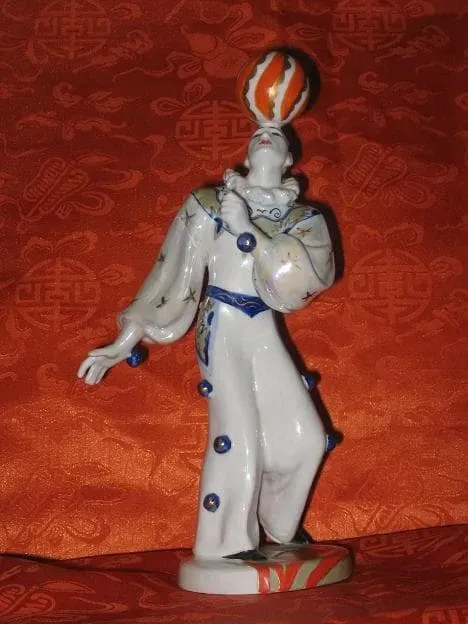
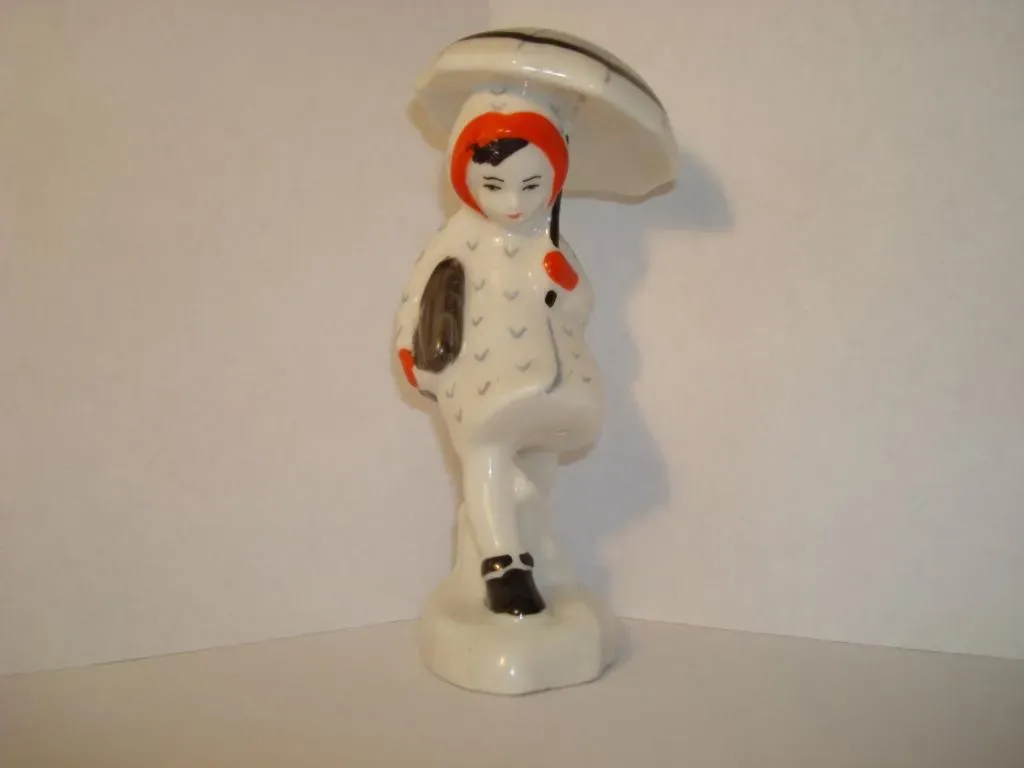
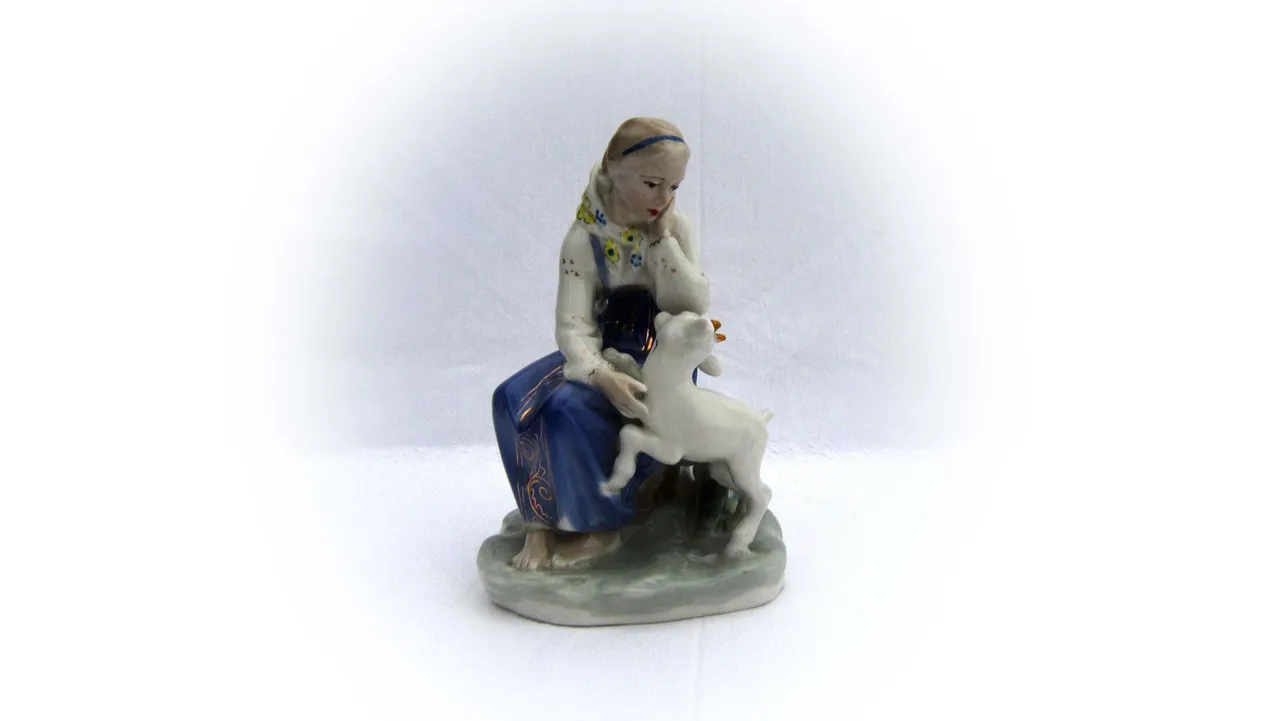
The Imperial Porcelain Factory also participated in international exhibitions for the first time. It is known that in 1851 the manufactory's products were presented at the London International Exhibition. The artistic design of products from this period was rich and diverse. The painting reflected styles of various eras, but the emphasis was still on scenes from everyday life. The factory's masters actively turned to subjects from antiquity, Eastern and Russian antiquity, and sought inspiration in Italian and French engravings. In addition, the changing social structure of society opened up a new consumer class, which was alien to grandiose and pompous items. The demand for simpler and more concise products increased, which is why features of realism as an art movement began to appear in the design of Imperial Porcelain Factory products. Against the background of growing love for various literary characters, the factory did not miss the opportunity and released figurines in the form of beloved heroes of that era, such as characters from the works of Walter Scott, Alexandre Dumas, etc.
The Imperial Porcelain Factory also significantly expanded its range. Now, in the workshops, one could find almost anything: from biscuit medallions to porcelain furniture. However, the main part of the production was still table and tea services and vases.
For collectors, it will be useful to know that vases from the Nicholas period were divided into three main forms:
- vases in the Meissen Rococo style with abundant sculptural decorations and floral ornamentation without pictorial scenes;
- krater-shaped, cup-shaped vases with a stem, whose form resembles a cylinder, sometimes slightly concave, with a short neck and low-set handles. This form, according to the terminology of that time, was called "medicis";
- elongated vases with shoulders, a long neck, and a narrow mouth, that is, vases resembling ancient urns and vases.
Usually, these vases were decorated with painted designs on both sides, sculptural ornamentation on the sides, and often framed with bronze mounts.
Summing up the events of that time, it can be concluded that, despite certain difficulties in the development and operation of the Imperial Porcelain Factory, there was a genuine interest and demand for its products. Undoubtedly, during the reign of Nicholas I, the IPF significantly expanded its product range, and the masters began to use more varied designs in accordance with fashion trends and European samples.