Porcelain, earthenware, ceramics
Lomonosov Leningrad Plant

Porcelain Factory
History of the Lomonosov Porcelain Factory (LPF).
The famous Russian porcelain factory was founded in 1744 in the 18th century by Empress Elizabeth Petrovna, daughter of Peter the Great. The Russian scientist Dmitry Vinogradov, after many years of research, discovered the secret of porcelain production and developed the technology for its manufacture. It should be noted that at that time the secret of porcelain was known only to Chinese craftsmen. Only the Saxon alchemist J. Bottger discovered the method of producing "European" hard porcelain. Peter the Great, who visited European countries and was interested in all modern inventions, was very intrigued by the secrets of porcelain making. He ordered it to be brought to Russia with the help of foreign craftsmen, but without success. Peter I's idea of creating his own porcelain production succeeded after his death. His daughter, Empress Elizabeth (1741-1761), hired the scientist Dmitry Vinogradov, who used local raw materials—clay from Gzhel and Olonets quartz with alabaster. Vinogradov also financed the venture, creating the first Russian workshops for training in porcelain production.
Initially, the factory belonged to the Romanov dynasty and produced tableware and other porcelain items exclusively for the Russian tsar. Later, in the mid-19th century, it was renamed the "Imperial Porcelain Factory." The factory supplied the needs of His Majesty the Tsar's court and, compared to private porcelain factories, practiced small-batch production. The products were extremely expensive and very rarely offered for sale.
On the centenary of the factory's founding, a porcelain museum was opened, whose collection now contains 20,000 exhibits reflecting the evolution of artistic porcelain production. Items made from 1750 to 1820, with the participation of outstanding masters from the Academy of Arts involved in the design and decoration of porcelain, are of particular interest. Later, the ties between the factory and the Academy of Arts sharply declined, and the artistic quality of the items and their production technology deteriorated.
At the beginning of the 19th century, the factory was reconstructed and began production of complex and large-scale porcelain items.
In 1915, due to the First World War, the nature of the factory's products changed rapidly, and the factory switched to the production of laboratory vessels, heat-resistant porcelain tubes, spark plugs, etc.
After 1917, when the Bolsheviks came to power, the factory was nationalized and renamed the "State Porcelain Factory."
In the 1920s, the factory's efforts were focused on developing technologies and industrial production of the most complex items intended for technical purposes, as well as on the development and production of porcelain with propaganda symbols, which was associated with this period in the life of the Soviet state. Tableware produced in the first post-revolutionary years was exhibited abroad. Items produced at the factory won a gold medal at the 1925 World's Fair in Paris, and some individual artists were awarded silver medals for their works.
In 1925, on the occasion of the 200th anniversary of the Russian Academy of Sciences, the factory was renamed again and given the name of the founder of the academy, Mikhail Lomonosov. The factory became known as the "Leningrad Porcelain Factory named after M.V. Lomonosov" (LPF, the abbreviation comes from the Russian name of the factory—Leningrad Porcelain Factory, or unofficially, the Lomonosov Porcelain Factory).
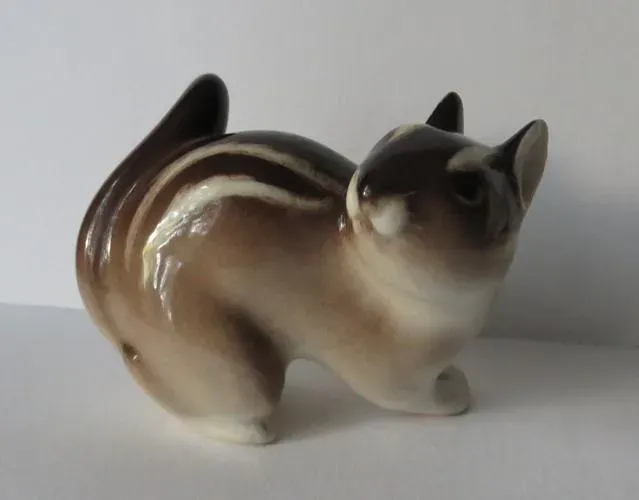
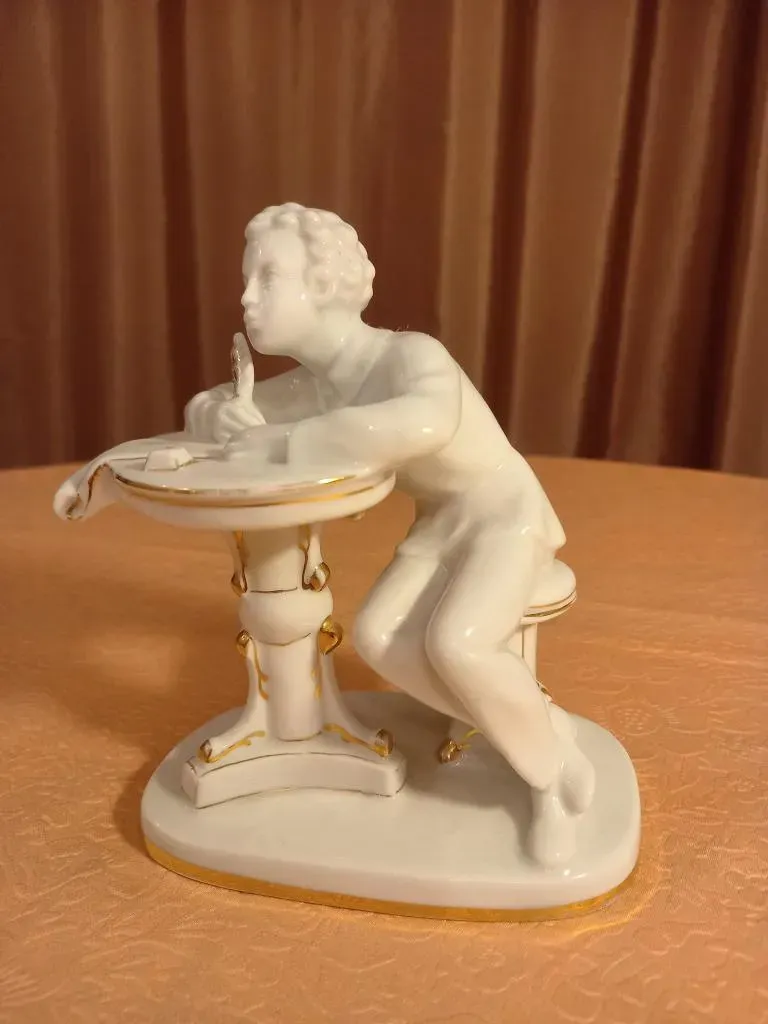
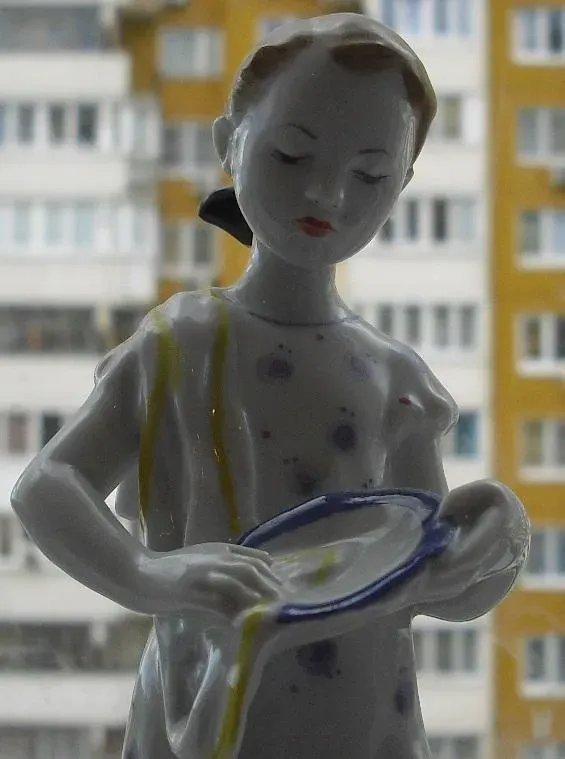
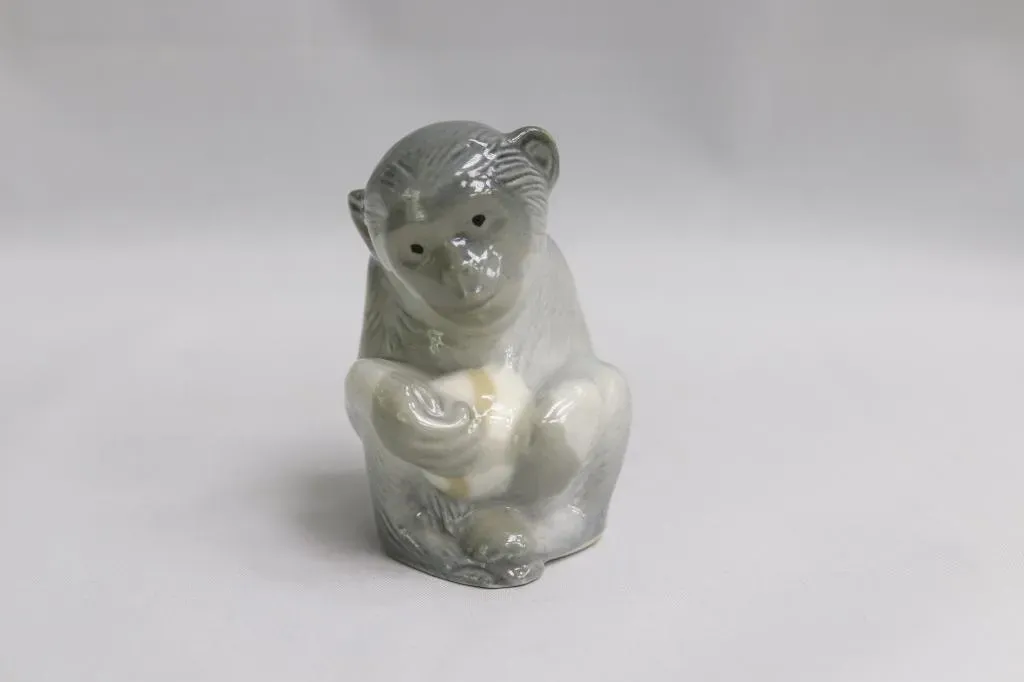
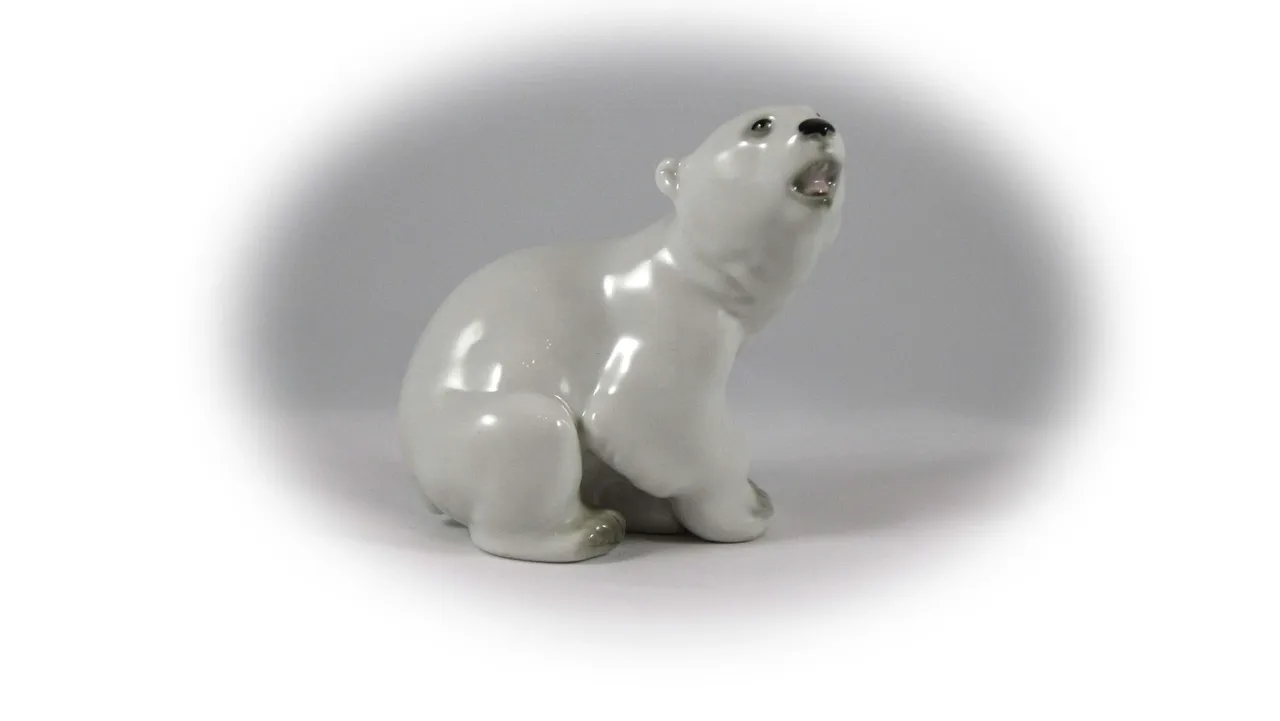
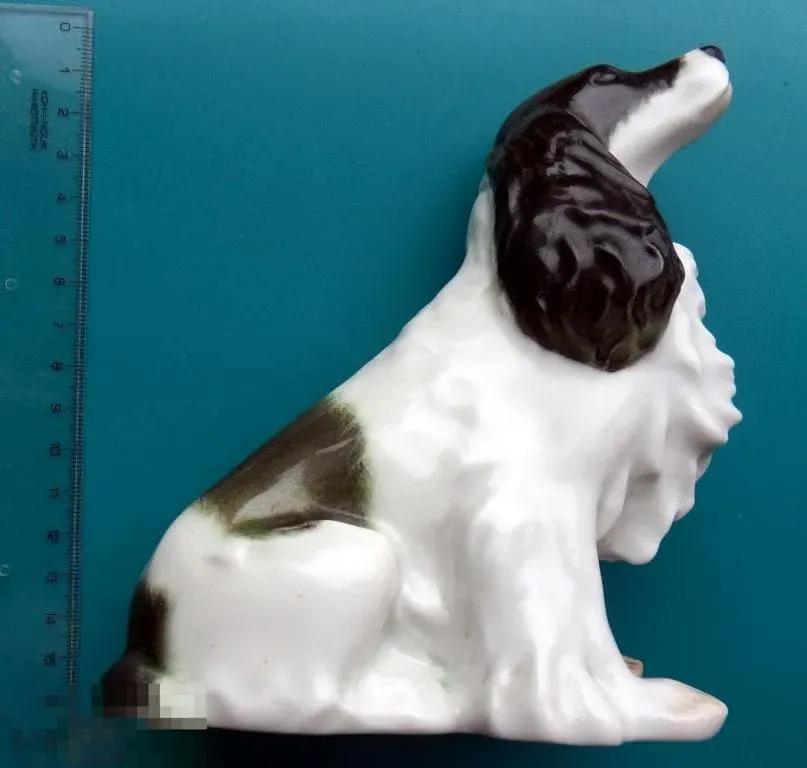
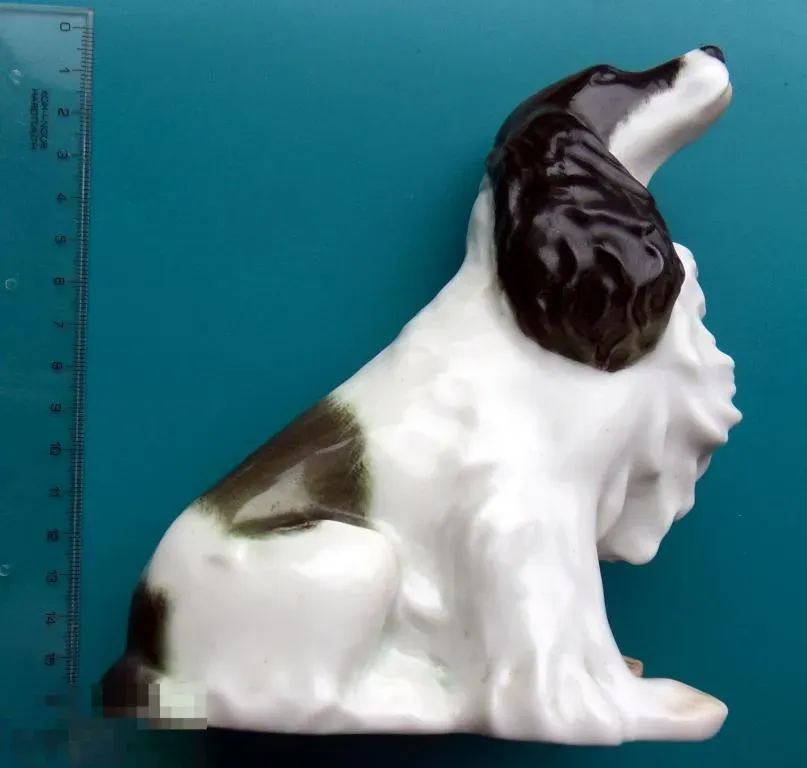
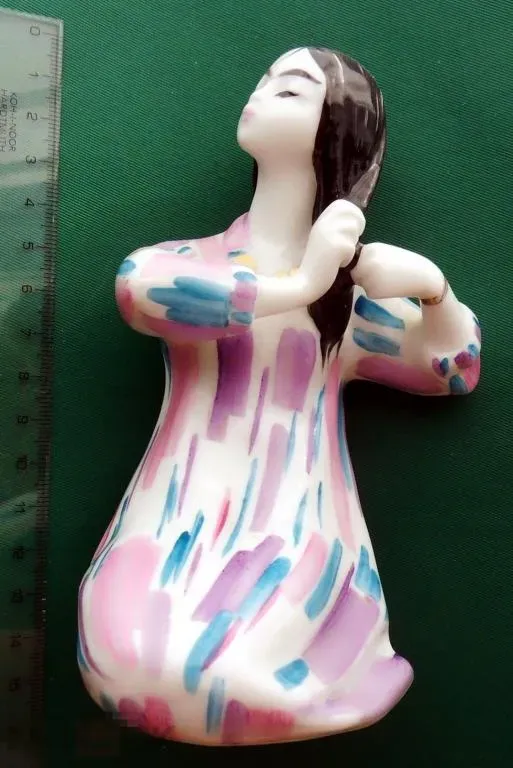
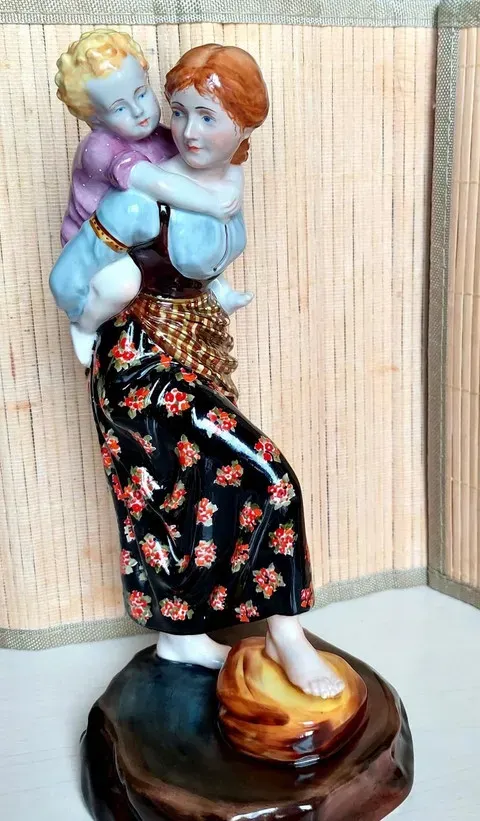
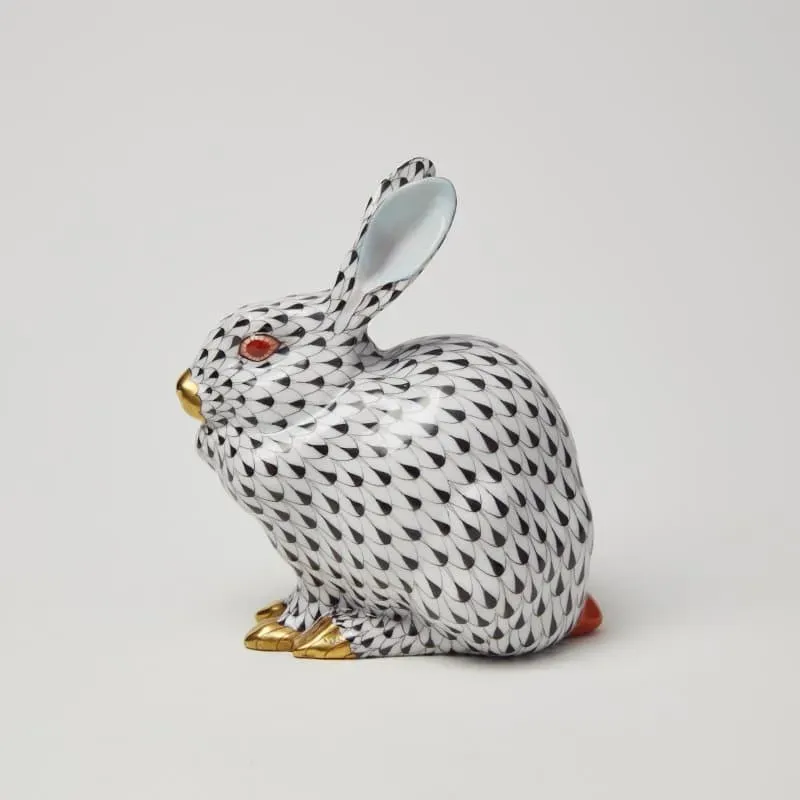
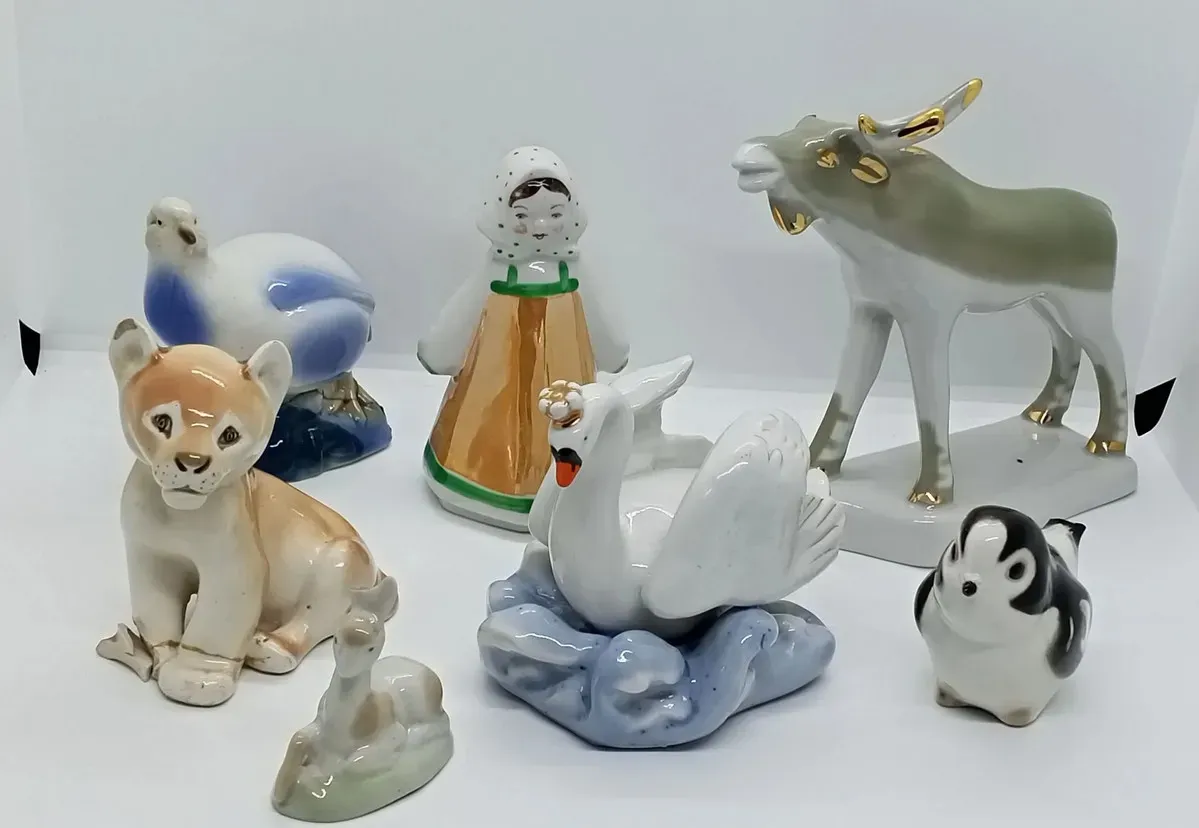
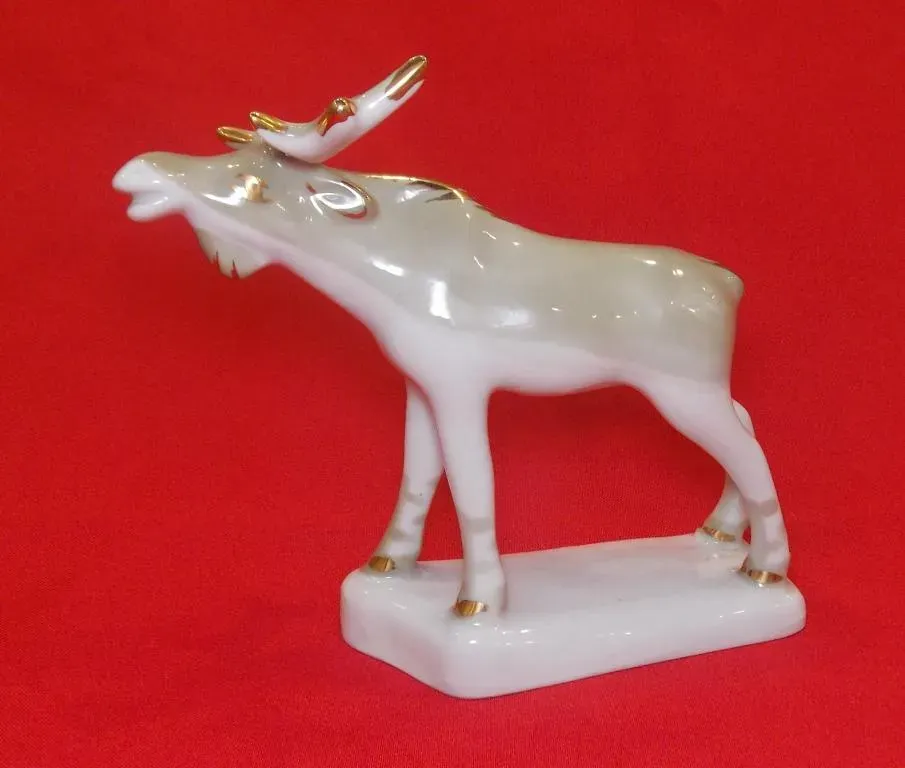
The factory produces a wide range of porcelain tableware—tea and coffee sets of various shapes and decorations, goblets, cups, saucers and presentation sets, flower vases, sculptures (mainly representing animals), wine decanters, and all kinds of souvenirs. Up to 500 lines are in production simultaneously. All complex designs are executed on porcelain by freehand painting, while simple graphic models are transferred onto items using multicolored fabrics and then painted by artists.
The Lomonosov factory was the first in the country to introduce the technology and establish the production of thin-walled porcelain items, which are distinguished by increased whiteness, thinness, and transparency compared to traditional hard porcelain.
Porcelain items with the "LFZ" trademark are well known in 30 countries. They are exported to Belgium, Canada, Denmark, England, Finland, France, Germany, the Netherlands, Japan, Italy, the USA, and other countries.