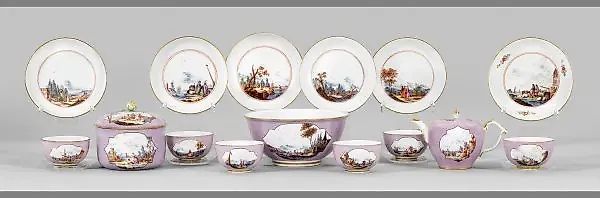
Meissen porcelain service set with lavender color and decor depicting trade and landscape.
Description
9-piece tea set; 6 small cups with saucers, teapot, sugar container, and bowl. Round shapes. Spherical pot with a relief handle and a leaf-shaped spout. Partially plastic pine or floral handle. The wall features a bright pale lilac background with outlines of territories depicting landscape scenes with trees. In the distance, natural landscapes, sometimes near a riverbank with sailboats and impressive architecture, standing merchants by barrels and balls, as well as couples and groups chatting or engaged in work. The mirror displays large harbor landscapes and depictions of rural fields, meticulously painted in polychrome colors with gold elements. Sword mark. Height of the pot: 9.5 cm. Between 1725 and 1735, most attempts were made to develop various background colors. Johann Gregorious Höroldt, at the insistence of Augustus the Strong, experimented around 1726/1727 with different recipes for background colors, thereby laying the foundation for Meissen porcelain. Among the rarest background colors are pale lilac shades. The painting can be attributed to the factory artist and Höroldt's associate Johann Georg Heintze (active circa 1720–1748), who specialized in landscapes and scenes with merchants. See Pietsch, Wark Collection, No. 225, p. 457ff; Jedding, p. 137. A rare 9-piece porcelain set on a pale lilac background with scenes of merchants and figurative landscapes. Sword marks. Meissen. Circa 1740.
Meissen (Meissen)
Additional lots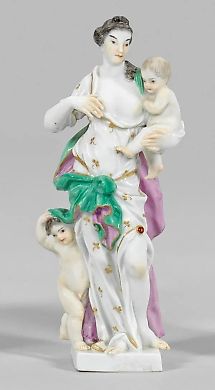
Lot No. 14312 Group of figures "Allegories of Love"
Meissen (Meissen)
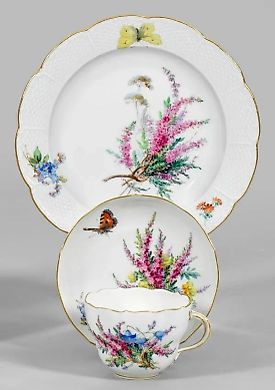
Lot No. 14251 Coffee set with tamarisk decor
Meissen (Meissen)
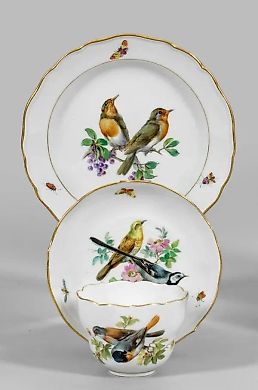
Lot No. 14252 Coffee set with singing bird decor
Meissen (Meissen)
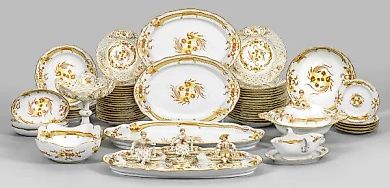
Lot No. 14244 Meissen dinner service with "Rich Dragon" decor.
Meissen (Meissen)
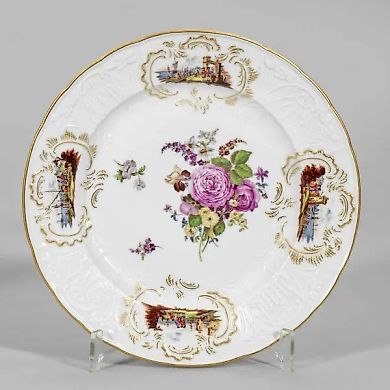
Lot No. 14283 Wall plate depicting a merchant and floral deco…
Meissen (Meissen)
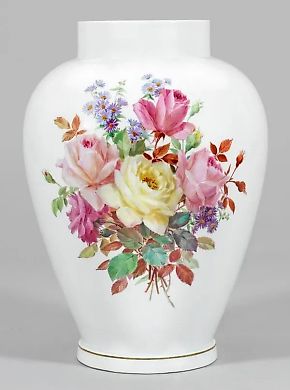
Lot No. 14268 A large decorated vase with a rose ornament.
Meissen (Meissen)
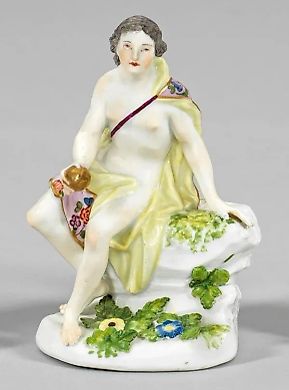
Lot No. 14386 Porcelain sample of Paris
Meissen (Meissen)
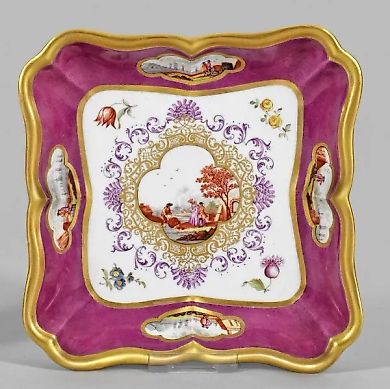
Lot No. 14296 Porcelain bowl with a violet background
Meissen (Meissen)
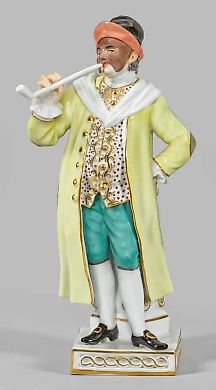
Lot No. 13247 Porcelain figurine "Cortezano" from the Commedi…
Meissen (Meissen)
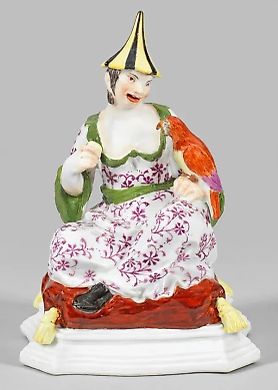
Lot No. 14447 Meissen pagoda "Chinese Woman with a Parrot"
Meissen (Meissen)
Similar lots
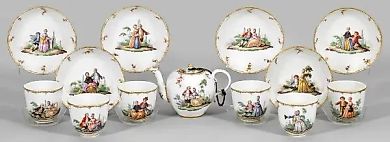
Lot No. 14340 Teapots and decorative cups with cotton decor.
Fürstenberg
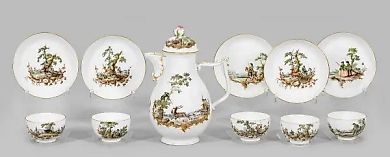
Lot No. 14349 Meissen hunting coffee set
Meissen (Meissen)
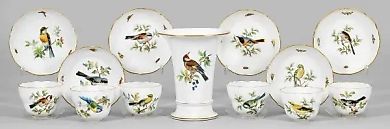
Lot No. 14253 Coffee set with a vase
Meissen (Meissen)
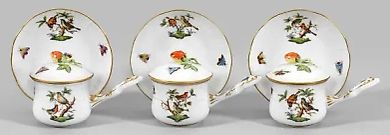
Lot No. 14259 Set of three Hungarian porcelain cups
Herend (Herend)
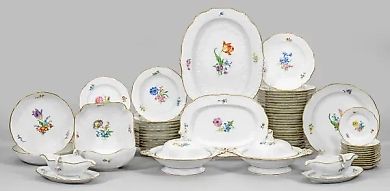
Lot No. 14235 71-piece "Marseille" porcelain dinner set
Meissen (Meissen)
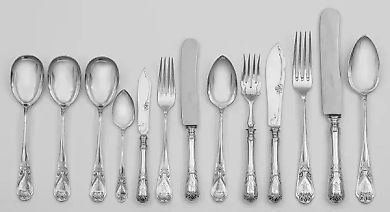
Lot No. 14473 Beautiful silver cutlery set in Art Nouveau sty…
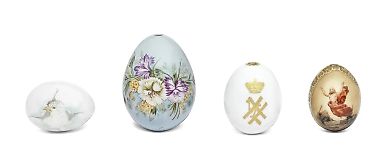
Lot No. 15202 Porcelain Easter eggs from various manufacturer…
Kuznetsova M.S. society