Onegin and Tatyana
Description
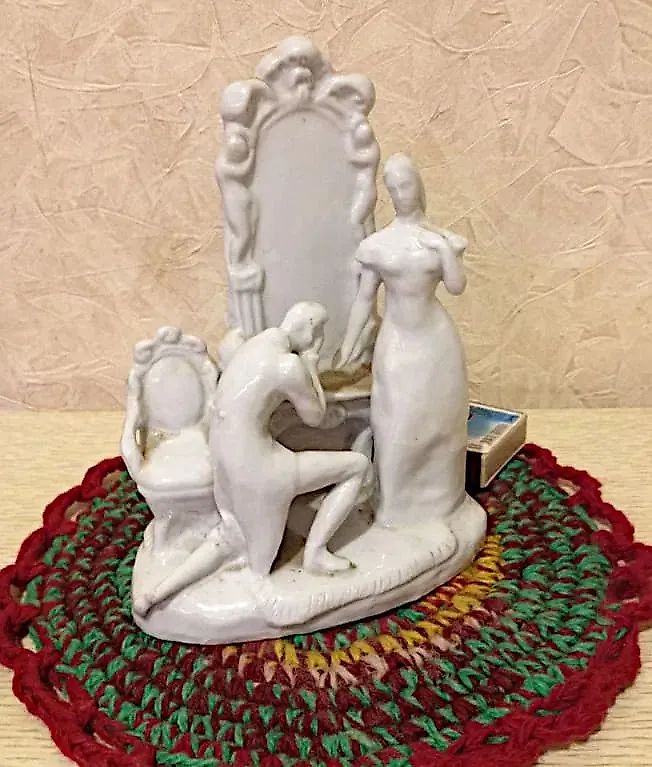
Sculptural composition "Onegin and Tatyana,"
sculptor V. G. Stamov, LFZ, 1940s.
Height – 153 mm, weight 348 g.
An iconic, essentially eternal story about Love, a narrative composition in the style of symbolism, mega-rare, a museum exhibit, from a very original sculptor of the Leningrad Porcelain Factory. Made immediately after the Great Patriotic War – during a very difficult time for the USSR!
No chips or restoration (checked, including under ultraviolet light)! Rings like a beautiful tuning fork of Love! Collector’s condition! There are a couple of miniature (about 1 mm long) inclusions on Onegin’s head (on the right, closer to the temple area) – they are visible in photo #1.
There are a couple of miniature (about 1 mm long) nicks, possibly under the glaze, the edges are not sharp, covered with age-old dust, they are tiny – overall, pure perfectionism)), there is an inclusion on the glaze surface (about 1 mm long) and a tiny fold in the porcelain mass (a kiln crack?) – please see the penultimate and last macro photos. There are a couple of insignificant glaze underfills, only on the base (I think technological), they are noticeable with a magnifying glass, one in the front, the other in the back, their photos, labeled, are in the cloud. The gilding (thin gold outline) is absent. But that’s not important anymore))! Perhaps it did not survive, this depends on its quality, adherence to the technological process, and the specific storage conditions (in a display case or open, humidity, gases, suspensions, ultraviolet, ambient temperature and its fluctuations, etc.). In the cloud, there are photos of an ashtray in the shape of an eagle, a vase with sculpted flowers, a vase with painting – please see how sometimes gilding disappears not from friction, but from the friction of time)). I do not wash the figure – so that you can see the traces of its storage over an indefinite period, these are clearly not “china cabinet” storage marks. It is waiting here, hidden away)), for a lucky, wealthy, self-sufficient, Respected Collector, not accustomed to denying themselves the pleasure of owning a true exclusive – the rarest works of art. At your request, before shipping, I will clean the figure from dust, but it is beautiful as it is)).
Onegin and the noble-spirited Tatyana – my personal opinion)), according to the novel by the Russian poet A.S. Pushkin.
"But there is no faith in the sincerity of Eugene's feelings. Tatyana understands this. The picture is clear: he is an eternal wanderer, without serious occupation, who met a young lady whose love he rejected with a smirk. And now, seeing her at the ball, in the dazzling glitter of lights, he suddenly becomes filled with feelings for her. Yes, the scenery has changed. The country girl, whom he once taught a lesson, is now worshipped by society. And society’s opinion is an unquestionable authority for Onegin. He saw that Tatyana is respected in society, and ‘discovered’ in himself a feeling of love. And Tatyana, as a perceptive and intelligent young lady, realizes this. Most likely, Onegin is in love, but only ‘with his new fantasy’..."
You will own, admire, and manage it. The birthplace of the future sculptor was the village of Koktebel in Crimea, where he was born in 1914. The understanding of what to choose as his life’s work did not come to the young man immediately. Therefore, at first, he received an initial technical vocational education, studying at a vocational school in the city of Stary Krym, and then entered the Kerch Mining and Metallurgical Technical School, which he graduated from in 1934. One of his first jobs was at the P. L. Voinov Metallurgical Plant in Kerch, where Stamov worked as a designer. But the young man was more drawn to creativity, to creation. This prompted him, in parallel with his work at the plant, to attend an art club led by artist-architect A. V. Shapovalov. Some time later, Stamov decided to master a new profession. In 1935, he was admitted to the preparatory classes, and two years later was enrolled as a student in the sculpture faculty at the Institute of Painting, Sculpture and Architecture in Leningrad. One of Stamov’s first serious works as a sculptor was reliefs for the interior and facade of the factory club building, which he made from concrete.
During the years of the Great Patriotic War, he had to forget about the sculptor’s craft and his studies. At first, Stamov worked on the defensive lines of besieged Leningrad, then did labor work in the Arkhangelsk region. After the war, Stamov returned to Leningrad, where he resumed his studies at the institute in the workshop of A. T. Matveev. This master of Russian and Soviet plastic arts had a great influence on the formation of the young sculptor’s creative worldview. The student’s graduation thesis in 1947 was the sculpture “Denis Davydov,” and his first job in his profession was at the famous Leningrad Porcelain Factory, where Stamov worked from 1948 to 1950. For many more years, he was a member of the LFZ Art Council.
Gaining experience, Stamov regularly participated in professional union, Russian, and international exhibitions and took an active part as an expert in the Monumental Sculpture Council of the Department of Culture of the Leningrad City Executive Committee. From 1959 to 1978, he was chairman of the Sculpture Art Council of the Leningrad Organization of the Art Fund of the RSFSR. Over the years, success and recognition as a master of his craft came – in 1965 he was awarded the title of Honored Artist of the RSFSR. Since 1964, Stamov was a board member first of the Union of Artists of the RSFSR, and since 1969 – of the Union of Artists of the USSR. Also, since 1969, he was a member of the Expert Council on Monumental Sculpture of the Department of Culture of the Leningrad City Executive Committee.
Among Stamov’s main works are such as “The Weaver,” “Working Morning,” “Postwoman Zhenya Khokhlova,” “Lermontov,” “Peter I,” “Peace,” “Anxiety,” “Torso,” “Bread.” The work of Vasily Gavrilovich Stamov was marked by the gold medal of the USSR Academy of Arts, the USSR State Prize, and the honorary title “People’s Artist of the RSFSR.”
Dear friends, I ask you to read the article about Vasily Gavrilovich as well, it turns out he was also a co-author of the monument to V. I. Lenin!
Lomonosov Leningrad Plant
Additional lots
Lot No. 13047 Africa
Lomonosov Leningrad Plant
Lot No. 12777 Ballerina
Lomonosov Leningrad Plant
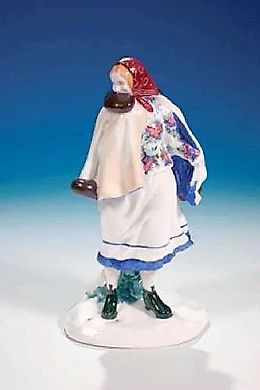
Lot No. 15288 "Dancer." A Soviet porcelain figurine of a peas…
Lomonosov Leningrad Plant
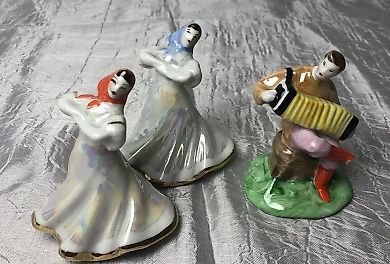
Lot No. 127 Porcelain figurine. Accordionist and dancers. D…
Lomonosov Leningrad Plant
★★★★★
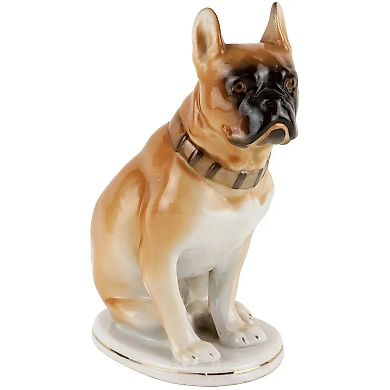
Lot No. 13975 Bulldog
Lomonosov Leningrad Plant
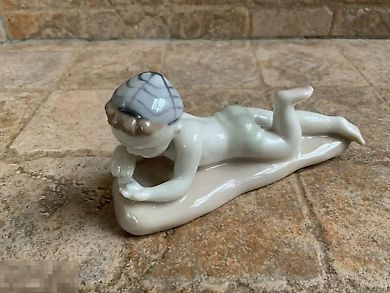
Lot No. 12828 BOY with a PEBBLE on the beach
Lomonosov Leningrad Plant
Lot No. 13826 Boy on the beach
Lomonosov Leningrad Plant
Lot No. 15645 DANCING GIRL (ORIENTAL DANCE)
Lomonosov Leningrad Plant
Lot No. 15194 FIGURINE OF A CAT CHEF AND A BOARD
Lomonosov Leningrad Plant
Lot No. 13840 Dove Salt Shaker
Lomonosov Leningrad Plant
Similar lots
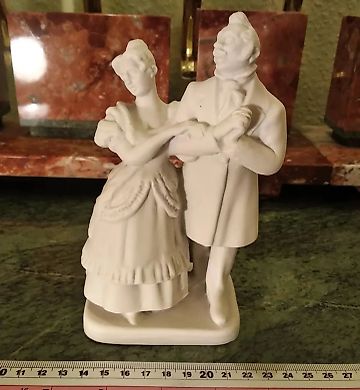
Lot No. 13014 Manilovs
Lomonosov Leningrad Plant
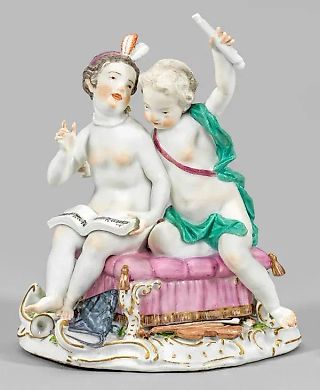
Lot No. 14402 Rare porcelain group of children in the form of…
Meissen (Meissen)
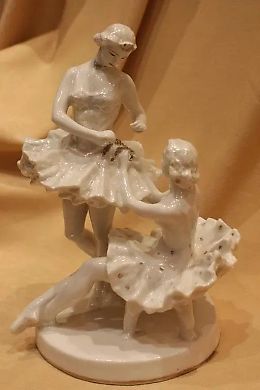
Lot No. 13779 Ballerinas before the performance.
Imperial Porcelain Factory
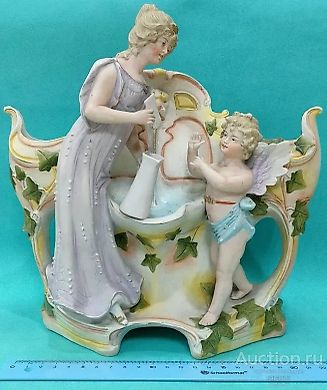
Lot No. 12587 Card holder figurine. Biscuit porcelain. German…
Lot No. 12389 A girl in a national costume with flowers in 50…
Riga Porcelain and Faience Factory
Lot No. 13793 The Little Boy with a Kid
Rosenthal (Rosenthal)
Lot No. 13483 Mother's love
Meissen (Meissen)
Lot No. 15905 Soviet porcelain group "Kumushki" - ancient Rus…
Kuznetsova M.S. society
Lot No. 14409 Mythological group of Meissen figures "The Triu…
Meissen (Meissen)
Lot No. 16047 Kiev porcelain figurine group depicting a man a…
KEKHZ